Most couples assume that the carefully posed shots, the ones where everyone is lined up and smiling at the camera, are the images they’ll treasure most. But flick through those photos five years later and something feels a little flat. The real magic of your wedding day lives in the stolen glances, the tears you didn’t plan for, and the laughter that caught you off guard. Documentary style photography is built around capturing exactly those moments, and this article will walk you through what it means, how it compares to other approaches, and how you can make it work beautifully for your day.
Key Takeaways
| Point | Details |
|---|---|
| Authentic memories | Documentary style wedding photography captures real moments, not just posed perfection. You can also explore our Adelaide wedding photographers. |
| Style comparison | There are clear differences between documentary, traditional, and editorial approaches. |
| Expert techniques | Photographers use a mix of pure documentary and hybrid methods to suit each couple. |
| Planning tips | Couples can brief their photographer and plan for genuine, candid coverage. |
| Emotional impact | Unscripted photographs often resonate most after the wedding is over. |
What is documentary style photography?
Documentary style photography, sometimes called wedding photojournalism, is an approach where your photographer observes and records events as they naturally unfold. There is no direction, no “look this way,” and no manufactured moments. Instead, the focus falls on the real story of your day.
The key features that define this style include:
- Candid, unposed moments captured as they happen
- A narrative arc that follows your day from getting ready to the last dance
- Emotional authenticity over technical perfection
- A fly-on-the-wall presence that keeps guests relaxed and unselfconscious
As one guide notes, documentary favours authenticity over polish, making it especially suited to couples who want relaxed, emotionally resonant coverage rather than a catalogue of formal portraits.
“The best documentary wedding photographs are the ones that remind you exactly how something felt, not just how it looked.”
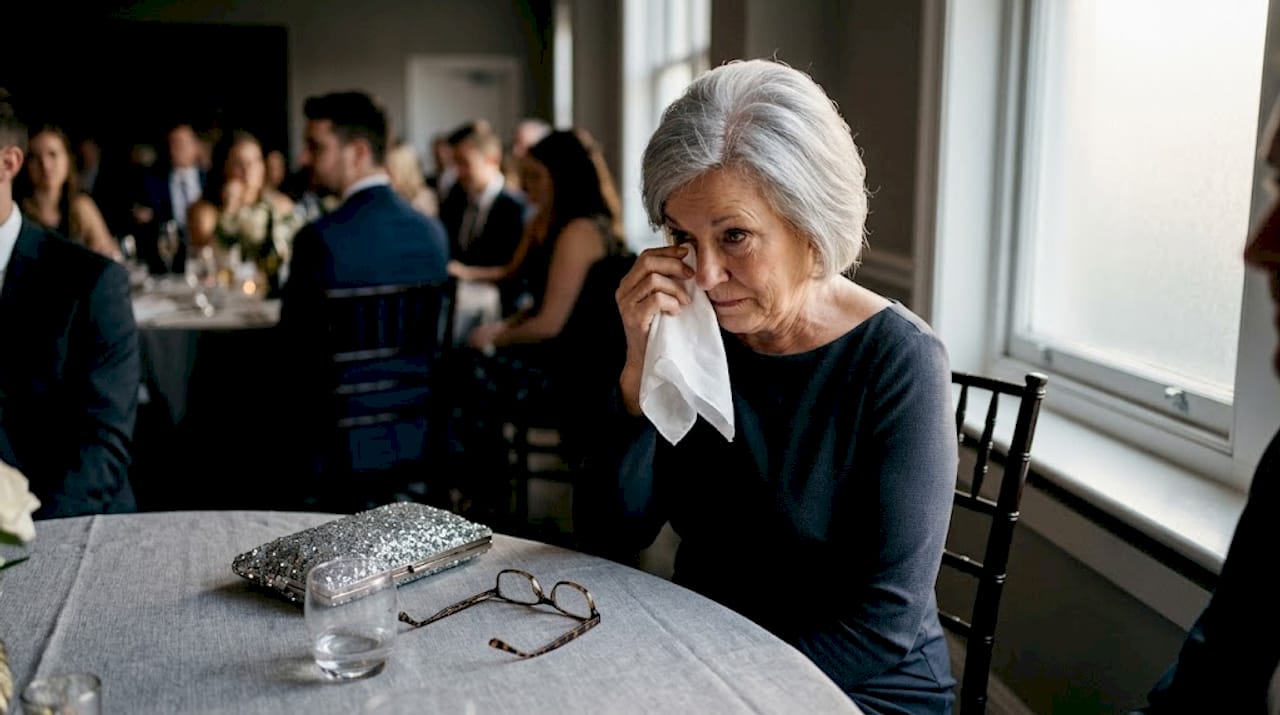
This is why the style resonates so strongly. When you look back at an image of your grandmother wiping her eyes during the ceremony, or your partner breaking into nervous laughter at the altar, you feel transported. That is the emotional currency of authentic wedding photography done well.
How documentary style differs from traditional and editorial photography
Understanding what documentary style is, it’s helpful to see how it stands apart from other popular approaches. The three styles couples most commonly encounter are documentary, traditional, and editorial. Each has its own philosophy and produces very different results.
Traditional photography prioritises perfection through posed, directed, formal portraits, while editorial photography leans into styled, dramatic lighting and fashion-inspired composition. Documentary sits firmly on the opposite end, where authenticity wins every time.
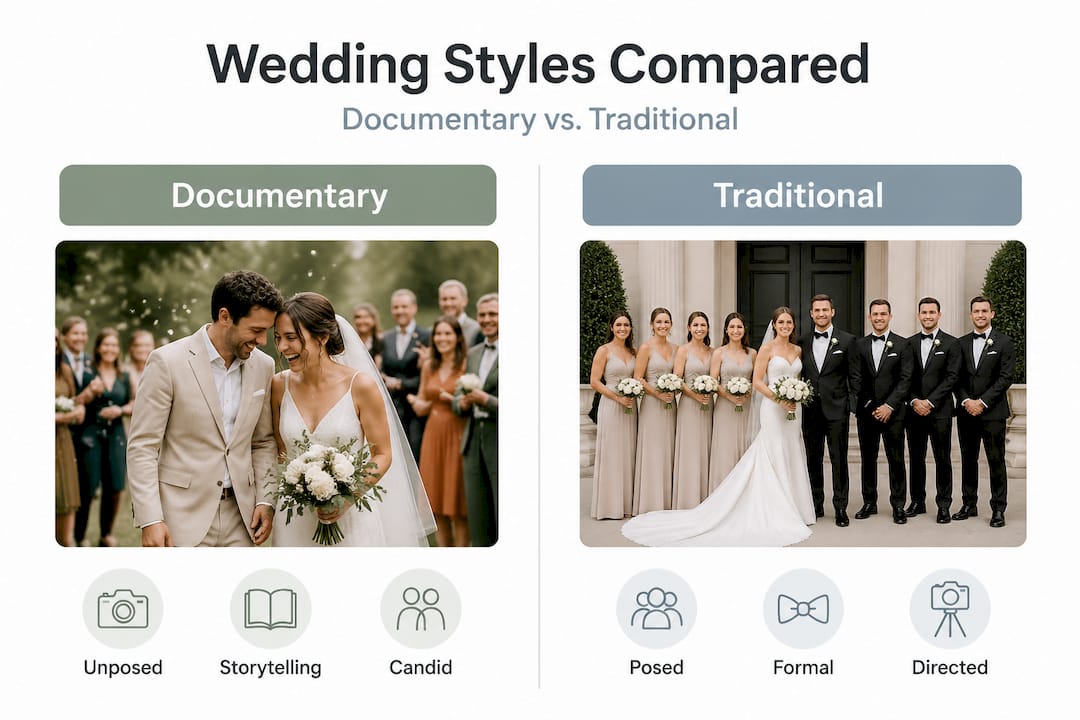
| Feature | Documentary | Traditional | Editorial |
|---|---|---|---|
| Posing | None or minimal | Heavy direction | Fully styled |
| Photographer role | Observer | Director | Art director |
| Mood | Natural, emotional | Formal, polished | Dramatic, fashion-forward |
| Guest comfort | High | Moderate | Low |
| Storytelling | Strong narrative arc | Portrait-focused | Concept-driven |
| Best for | Couples wanting real moments | Classic, timeless look | Styled shoots and fashion |
A few practical differences that matter on the day:
- Direction and comfort. Traditional photography often requires lengthy portrait sessions where guests and bridal parties are arranged and rearranged. This can eat into your reception time and leave people feeling restless.
- Natural moments. When guests know they’re being watched and directed, their behaviour changes. Documentary’s relaxed approach means people forget the camera is there, which is when the genuinely beautiful moments surface.
- The story it tells. Browsing through a wedding photography portfolio shot in documentary style feels like reading a short story. Traditional albums, while lovely, often feel more like a collection of individual portraits without a connecting thread.
Research consistently shows that couples rank candid, emotion-filled imagery among their most valued wedding photographs, far above formal group shots. That preference is worth taking seriously when you’re choosing your approach.
Key elements and expert nuances of documentary wedding photography
With the differences clear, it’s important to understand the essential components and how professionals navigate real wedding scenarios. Documentary photography is not as simple as just pointing a camera and pressing the shutter. It requires a refined set of skills and thoughtful judgement.
Here are the core elements that define skilled documentary wedding photography:
- Anticipation. Great documentary photographers read a room. They position themselves before a moment happens, not after. This means understanding the schedule, watching body language, and knowing when something emotional is about to occur.
- Light reading. Ceremonies in dim venues, outdoor receptions at dusk, and dance floors with flashing lights all present real challenges. Managing unpredictable lighting conditions is one of the most demanding aspects of this style.
- Timing and restraint. Knowing when not to shoot is just as important as knowing when to press the shutter. Over-photographing a moment can disrupt its naturalness.
- Hybrid approaches. Many photographers today blend styles. Pure photojournalism avoids all posing, while hybrid approaches include light guidance for key portraits. Post-documentary photography pushes further, embracing subjectivity over strict objectivity.
- Family formals. These remain a practical necessity for most couples. The skill lies in completing them efficiently without breaking the emotional momentum of the day.
| Approach | Posing level | Storytelling focus | Best context |
|---|---|---|---|
| Pure documentary | None | Very high | Intimate, relaxed weddings |
| Hybrid documentary | Minimal | High | Most weddings |
| Post-documentary | Minimal to moderate | Subjective, artistic | Creative, experimental weddings |
Browsing real examples through a couples photography portfolio gives you a genuine sense of how these approaches play out in practice, which is far more useful than reading a description alone.
Pro Tip: When meeting your photographer, ask them to show you full wedding galleries, not just highlight images. A full gallery reveals how consistently they capture candid moments across an entire day, including the quieter, in-between moments that really tell the story.
Review our candid photography tips for more detail on how to prepare for authentic, unposed portraits.
How couples can make documentary style work for their wedding
Now you’re familiar with expert nuances, let’s get practical about how you can bring documentary style to life at your wedding. Choosing the right approach is only part of the equation. How you plan and communicate makes an enormous difference to the final result.
Here is how to set yourself up for success:
- Brief your photographer clearly. Share your priorities. Are you most concerned with capturing your parents’ reactions? The toasts? The first look? A clear brief helps your photographer anticipate and prioritise. Exploring a personalised wedding photography approach means your specific story gets told, not a generic version of it.
- Build in breathing room. Tight schedules are the enemy of candid moments. When you’re rushing from one location to the next, people tense up and the natural moments disappear. Allow time between key events for things to simply unfold.
- Keep family formals short and sweet. Ensuring family formals without disrupting flow is a real craft. Prepare a concise list of essential group shots and nominate a family member to help herd people. Aim to complete them in 20 to 30 minutes so the rest of the day can breathe.
- Let your guests be themselves. Resist the urge to over-programme your reception. When people are free to chat, cry, dance badly, and connect genuinely, the documentary photographer has rich material to work with.
- Talk about moments that matter to you personally. Maybe your grandfather is travelling from interstate and the reunion will be emotional. Perhaps your best friend is notorious for a spectacular reaction face. Share these details. Your photographer can be ready.
Exploring your true love story photography brief together beforehand creates a shared understanding that pays dividends on the day.
Pro Tip: On the morning of your wedding, give yourselves at least 30 minutes of unscheduled time together. No guests, no obligations. This is when genuine, unguarded emotion surfaces and creates some of the most powerful images of the entire day.
Our honest take: why documentary style is the heart of wedding photography
After exploring the practicalities, it’s worth reflecting on the deeper emotional impact of documentary style photography. We’ve shot many weddings across Adelaide and South Australia, and one pattern shows up again and again. Couples who initially worried they weren’t “photogenic enough” for posed portraits are consistently the ones who fall most in love with their documentary images.
Here’s the uncomfortable truth about posed wedding photography: it records performance, not presence. When someone is directed to stand a certain way and smile on cue, the resulting image is technically correct but emotionally thin. You can see it in the eyes. There is a kind of distance there that no amount of beautiful light or perfect composition can fully bridge.
Authentic, candid imagery captures something else entirely. It captures the nervous squeeze of a hand before vows. The way someone’s face completely transforms when they see their partner at the end of the aisle. The absolute chaos and joy of a room full of people who love each other, all celebrating at once. These are the images that will genuinely move you decades from now.
That said, we’re honest about the balance. Dismissing family formals entirely is impractical and often regrettable. The skill is in completing them with warmth and efficiency, then returning quickly to the natural flow of the day. Authentic wedding coverage done well holds both realities at once.
The couples who get the most from documentary style are the ones who trust their photographer, give their guests room to be themselves, and resist the pressure to engineer every moment. Real love stories don’t need much production. They just need a skilled person who knows how to witness them.
Ready to capture your true love story?
If this approach to wedding photography feels right for you, we’d love to be part of your day. At SvenStudios, Steven and Luisa bring a relaxed, genuine documentary sensibility to every wedding, creating imagery that reflects who you actually are rather than a polished version of it. You can book authentic wedding photography with us or explore what a personalised wedding experience might look like for your specific vision. To see our style in action before making any decisions, view our couples portfolio and get a feel for how we tell real love stories.
Frequently asked questions
Will documentary style photography include family group photos?
Yes, most photographers incorporate family formals while maintaining the natural flow of the day, completing them efficiently so candid coverage can continue without interruption.
Is documentary style more expensive than traditional wedding photography?
Pricing varies by photographer, but the style itself doesn’t typically command higher rates. What you’re paying for is a different skill set and sensibility, not a premium tier.
Can you request some posed shots in a documentary coverage?
Absolutely. Hybrid documentary photography allows for light guidance and some posed portraits upon request, making it a flexible choice for most couples.
What are the main challenges photographers face using documentary style?
Photographers must manage unpredictable timing and low light while capturing key moments naturally, all without interrupting the emotional flow of the day.
Recommended
Love this style of photography?
Planning something beautiful?