Editing is the process that transforms raw wedding footage into a cinematic story couples can relive for the rest of their lives. Post-production in wedding films controls pacing, music, sound design, colour grading, and clip order to shape how viewers feel, not just what they see. Without skilled editing, even the most beautifully filmed wedding becomes a collection of disconnected clips. Tools like DaVinci Resolve and Adobe Premiere Pro give editors precise control over every frame, but the real craft lies in the emotional decisions behind each cut. This article explains how editing enhances wedding videos and what both couples and videographers need to know.
What key functions does editing perform in wedding videos?
The role of editing in wedding videos goes well beyond trimming clips. Editing shapes emotional peaks rather than presenting footage chronologically, building a narrative arc from the quiet anticipation of preparation through to the joy of the reception. That structure is what makes a wedding film feel like a story rather than a recording.
The core editing functions include:
- Narrative arrangement: Sorting footage into a meaningful sequence, typically preparation, ceremony, speeches, and reception, so the film has a clear emotional journey.
- Audio balancing: A dedicated audio pass focuses on noise reduction, equalisation, compression, and levelling to keep vows and speeches clear while music sits underneath without overpowering dialogue.
- Colour correction and grading: Editors harmonise footage from multiple cameras and lighting conditions to achieve consistent skin tones and a unified visual style, often using LUTs as reference looks.
- Pacing: Highlight shot lengths of around 6 to 10 seconds or montage cuts every 1 to 2 seconds at 90 to 110 BPM give the film a cinematic rhythm that matches its emotional tone.
- Moment selection: Choosing the glance, the laugh, the quiet tear rather than every available angle is where emotional intelligence separates a good editor from a great one.
Pro Tip: Ask your videographer to show you examples of their pacing style before the wedding. A film that feels too fast or too slow is almost impossible to fix after delivery.
How does editing enhance the emotional experience of wedding videos?
Emotional wedding films are crafted, not assembled. Editing shapes how viewers encode memories and feel the story, which means every cut, pause, and musical swell carries psychological weight. The difference between a film that makes people cry and one that simply documents events often comes down to timing decisions measured in fractions of a second.
Pacing is the most underestimated tool in this process. Letting a moment breathe, holding on a face for two seconds longer than feels comfortable, creates space for the viewer to feel something. Rushing through every shot in search of visual variety is one of the most common mistakes in wedding video editing, and it drains the emotional life out of the footage.
Silence is one of the most powerful storytelling tools available to a wedding editor. Dropping the music entirely before a key vow or speech line draws the viewer in and makes the moment feel real and unguarded.
Music selection is a deliberate narrative decision, not a playlist choice. Tempo, key, instrumentation, and volume all influence viewer mood, and the best editors treat music as a structural element that supports the story rather than decorates it. A track that peaks emotionally at the wrong moment can undercut even the most beautiful footage. Focusing on faces and subtle reactions, a nervous smile before the vows, a parent wiping their eyes during the first dance, gives viewers someone to connect with and deepens their empathy throughout the film.
What are the professional workflows and typical timelines for wedding video editing?
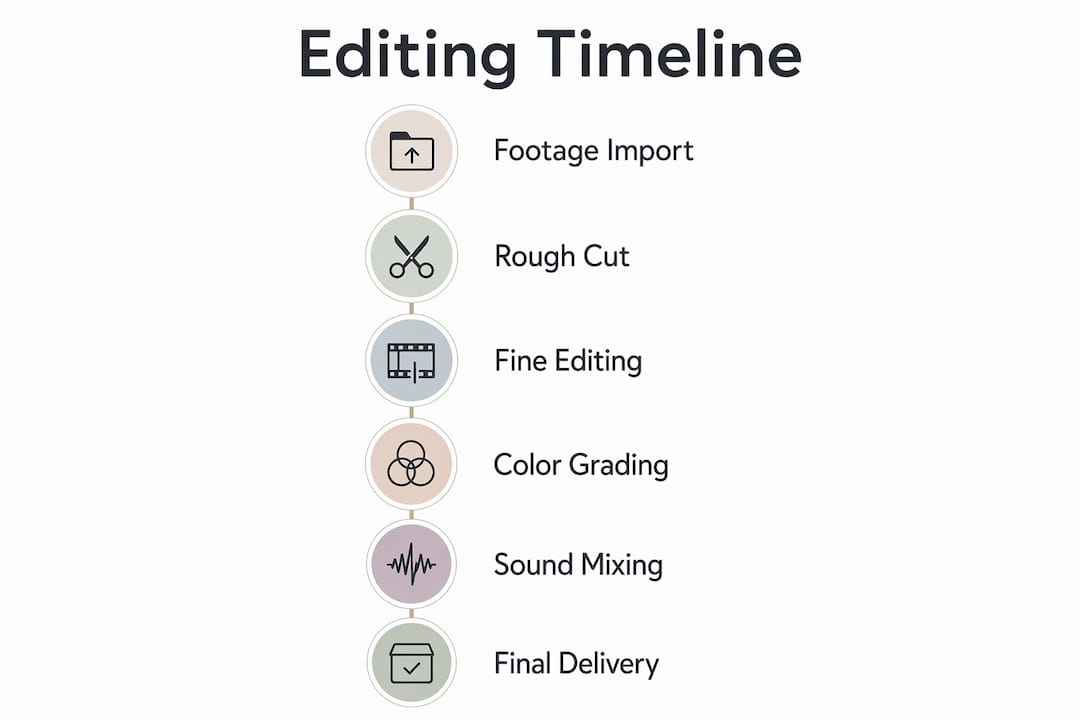
A professional wedding video editing workflow follows a consistent sequence regardless of the software used. Understanding this process helps couples set realistic expectations and helps videographers communicate their value clearly.
- Footage ingestion and organisation: All camera cards and audio recorders are backed up and organised by camera angle, time of day, and scene before any editing begins.
- Multi-camera sync: Sorting, arranging, and syncing audio from multiple cameras ensures no important moment is missed across large volumes of footage.
- Rough cut: The editor builds the film’s structure, selecting the best takes and arranging them into a narrative sequence.
- Audio pass: Noise reduction, equalisation, and music placement are handled as a dedicated step before colour work begins.
- Colour grade: Reference LUTs or presets are applied to achieve visual consistency across all cameras.
- Quality check and client review: The editor reviews pacing, audio clarity, and colour consistency before the couple sees the film.
- Delivery: Final export in agreed formats for web, social media, and archival use.
| Delivery type | Typical turnaround |
|---|---|
| Standard wedding film | 3 to 5 weeks |
| Express delivery | 24 to 48 hours |
Standard turnaround runs 3 to 5 weeks, while express services can deliver in 24 to 48 hours when editorial decisions on music and style are resolved in advance. Express delivery without pre-resolved decisions almost always results in revisions and delays, which defeats the purpose.
How can couples and videographers collaborate effectively on editing?
Clear communication before the wedding saves significant time and frustration during post-production. The editing process works best when both the couple and the videographer arrive at it with shared expectations about style, pacing, and deliverables.
Here is what makes collaboration work well:
- Define the editing style early. Share reference films that reflect the tone you want, whether that is cinematic and slow-paced or upbeat and energetic. Vague descriptions like “emotional but fun” leave too much open to interpretation.
- Provide concrete references. LUT files and pacing notes reduce style drift and give editors measurable targets rather than subjective impressions. This is the highest-leverage step for consistent results in multi-camera weddings.
- Understand the deliverables. Separating highlight reels, full ceremony films, and social media cuts into distinct projects reduces errors and keeps timelines organised during audio and colour passes.
- Prepare your music preferences in advance. Licensing matters, so discuss whether you want original compositions, licensed tracks through services like Musicbed or Artlist, or a specific song that requires clearance.
- Give structured feedback. Timestamped notes are far more useful than general comments. “The section from 2:10 to 2:45 feels too fast” is something an editor can act on immediately.
Pro Tip: If you are working with a separate editor rather than your videographer, share a short style guide document before footage is delivered. Even a one-page brief covering tone, music preferences, and key moments to include will cut revision rounds significantly.
Key takeaways
Skilled post-production in wedding films is the single greatest factor separating a forgettable recording from a film couples will watch for decades.
| Point | Details |
|---|---|
| Editing creates the narrative | Footage arranged by emotional arc, not chronology, is what makes a wedding film feel like a story. |
| Audio quality defines immersion | A dedicated audio pass for noise reduction and levelling preserves vows and speeches as the emotional core of the film. |
| Pacing is measurable | Shot lengths of 6 to 10 seconds and cut frequency targets give editors objective tools for consistent cinematic rhythm. |
| Collaboration reduces revisions | Providing LUTs, pacing references, and structured feedback before editing begins saves time and improves results. |
| Turnaround depends on preparation | Standard delivery takes 3 to 5 weeks; express turnaround requires all editorial decisions resolved in advance. |
Why editing is where the real storytelling happens
As someone who has filmed and edited weddings across Adelaide and South Australia for years, I can tell you honestly that the camera captures what happened. Editing decides what it means.
I have seen beautifully filmed weddings fall flat because the edit was rushed or technically inconsistent. And I have seen modest footage become genuinely moving films because the editor understood professional editing as a craft of emotional intention, not just technical assembly. Professional editing distinguishes itself through pacing, sound, and colour consistency rather than flashy effects or transitions. That is the part most people do not see, and it is the part that matters most.
What I would encourage every couple to think about is this: your wedding film is not a documentation project. It is a memory object. The way it is edited determines how you will feel when you watch it in ten years. Prioritising that investment, choosing a videographer who takes post-production as seriously as filming, is one of the most worthwhile decisions you can make in the whole planning process.
— Steven
Capture your story with Svenstudios
At Svenstudios, Steven and Luisa approach every wedding film with the same care they bring to filming: thoughtful, personal, and built around the moments that actually matter to you. Every package includes professional post-production with deliberate pacing, music selection, and colour grading tailored to your story. You can explore wedding highlight films crafted to preserve the emotion of your day, or browse the full range of Adelaide videography packages to find the right fit. If you would like to talk through your vision or view sample films, get in touch and we will walk you through the process from filming to final delivery.
FAQ
What does editing actually do in a wedding video?
Editing arranges footage into a narrative arc, balances audio, applies colour grading, and controls pacing to shape the emotional experience of the film. It is the process that turns raw clips into a story rather than a recording.
How long does wedding video editing take?
Standard wedding video editing takes 3 to 5 weeks from footage delivery to final film. Express services can deliver in 24 to 48 hours when music choices and editing style are confirmed before post-production begins.
What should couples provide to help the editing process?
Couples should share reference films for tone and pacing, confirm music preferences and licensing, and identify key moments they want included. Structured, timestamped feedback during the review stage also reduces revision rounds significantly.
Does music choice really affect the final film?
Music tempo, key, instrumentation, and volume directly influence how viewers feel throughout the film. A track that peaks at the wrong moment can undercut even the most beautifully filmed footage, so music selection is treated as a structural narrative decision, not a stylistic afterthought.
What is the difference between a highlight reel and a full wedding film?
A highlight reel is typically 3 to 7 minutes long and focuses on the emotional peaks of the day, edited to music with a cinematic rhythm. A full wedding film includes complete ceremony and speech footage and runs considerably longer, preserving the day in greater detail.
Recommended
- Wedding Highlight Films: Capture Your Story In Moments
- What Is A Virtual Reality Wedding Video?
- Wedding Videographer Roles Explained For Your Adelaide Film
- Why Hire A Wedding Videographer For Your Adelaide Wedding
Love this style of photography?
Planning something beautiful?