Planning a wedding can feel like organising a small festival, and the photography often gets treated as something that will “just happen.” It won’t. Without a clear wedding photo timeline, key moments slip by, couples spend half the day rushing between locations, and photographers are left scrambling. Knowing how to create a wedding photo timeline changes all of that. For more wedding ideas to help plan your big day, explore A whole lot of Wedding Ideas to help you plan your Big Day!. A thoughtful, flexible photo schedule gives you a structure to lean on so you stay present, your photographer knows exactly what to capture, and nothing important gets missed.
Key takeaways
| Point | Details |
|---|---|
| Start with your ceremony time | Work backwards from the ceremony to allocate time blocks for each photo session. |
| Build in buffer time | 15-20 minute buffers before key events absorb delays and prevent a cascading schedule collapse. |
| Consult your photographer early | Aligning expectations before the day avoids surprises and keeps everyone on the same page. |
| Flexible beats rigid | A timeline as a flexible guide reduces stress and keeps the couple present, not clock-watching. |
| Organise photos after the day | Use date-based file naming and back up in three separate locations to protect your memories long term. |
Before you start building your timeline
There is groundwork to cover before you put pen to paper. Skipping this step is where most couples go wrong. You end up with a timeline that looks good on paper but falls apart the moment real life steps in.
The first thing to do is gather your confirmed ceremony and reception schedule details. Know your ceremony start time, venue changeover windows, and how far apart your locations are. From there, think about the specific photo moments you actually want. Common ones include:
- Getting ready shots with your wedding party
- A first look with your partner before the ceremony
- Ceremony coverage (processional, vows, rings, kiss)
- Family formals and group photos
- Couple portraits at golden hour
- Reception highlights (speeches, first dance, cake cutting)
Once you have that list, talk to your photographer and planner before finalising anything. This conversation is one of the most useful things you can do. Your photographer will tell you what is realistic, how much travel time you need between venues, and where natural light will be at its best.
Time allocation matters more than most couples expect. Experts recommend 60 to 90 minutes for getting ready photos alone, because that window captures the candid, emotional detail shots that often end up being the most treasured images of the whole day.
Pro Tip: Ask your photographer to share a sample timeline from a previous wedding at a similar venue. It gives you a concrete reference point and often surfaces timing issues you hadn’t considered.
How to build your wedding photo schedule step by step
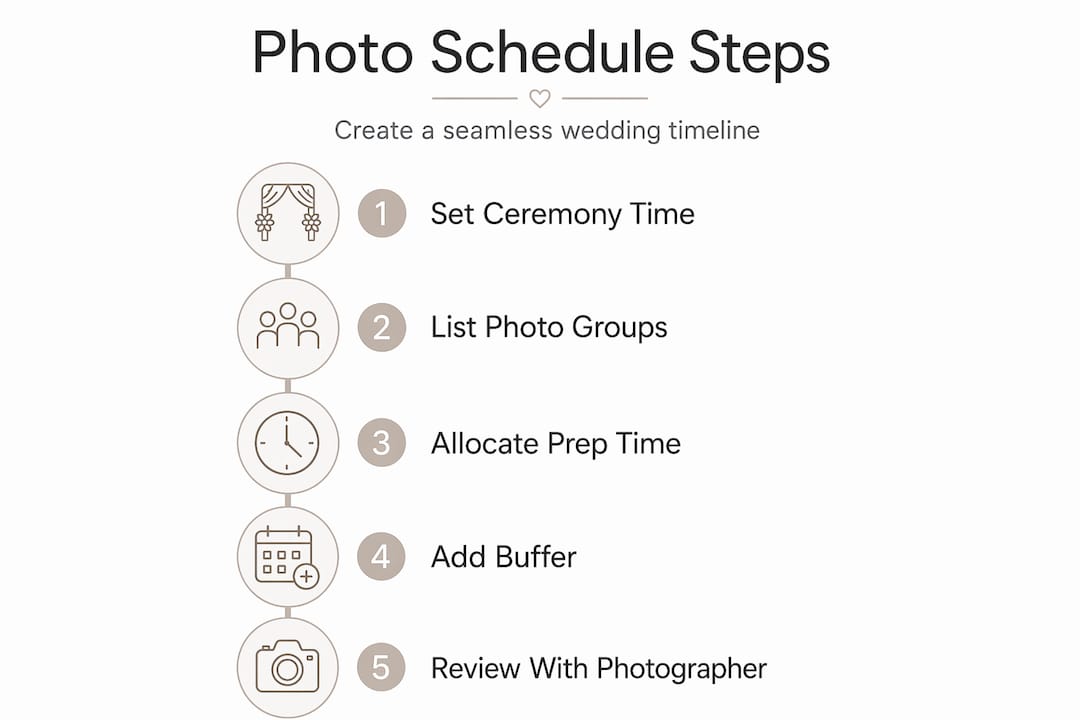
Once the groundwork is done, building the actual timeline is more straightforward than it sounds. Work backwards from your ceremony time rather than forwards from when you wake up. This anchors everything to the moment that matters most.
Here is a step-by-step approach that works well for most Australian weddings:
- Lock in your ceremony time. This is your anchor. Everything else is built around it.
- Work backwards to calculate getting ready time. If your ceremony is at 3 pm, and you want 90 minutes of getting ready coverage plus 30 minutes of travel, your photographer needs to arrive by 1 pm at the latest.
- Decide whether you want a first look. A 30-minute first look window gives you and your partner an unhurried, intimate moment that also takes pressure off the post-ceremony portrait session. If you skip it, plan for that time elsewhere.
- Allocate time blocks for each photo session. Family formals typically need 20 to 30 minutes for small groups, and longer if you have a large extended family. Couple portraits work best with 45 to 60 minutes, ideally timed around golden hour.
- Add buffer periods. Place 15 to 20 minute buffers before the ceremony and after family portraits. These small windows absorb the minor delays that always happen without derailing the rest of your day.
- Plan for guest photo sharing during cocktail hour. If your photographer or videographer offers a QR code sharing system, cocktail hour is the perfect moment for guests to upload their own candid shots without needing an app. It enriches your photo collection with perspectives you would never get otherwise. You can read more about how this works through Svenstudios’ guide on QR guest photo sharing.
- Review the full draft with your photographer and planner. A final check before the day catches conflicts and confirms the timeline is genuinely achievable.
Pro Tip: Consider natural light when scheduling couple portraits. The hour before sunset in Adelaide produces the warmest, most flattering light. If your venue allows it, plan your portrait session to end at golden hour rather than begin there.
Common timeline pitfalls and how to avoid them
Even well-planned timelines hit trouble. Knowing where things tend to go wrong helps you prepare rather than panic.
The most common mistake is building a minute-by-minute schedule that leaves no room to breathe. When every moment is accounted for with zero flexibility, one slow family member or a missing boutonniere throws the whole day into chaos. A well-constructed wedding photography timeline functions like a flexible guide, not a strict programme. Give yourself permission to build in breathing room.
Family portrait sessions are another common sticking point. Without preparation, these sessions drag on far longer than expected. A detailed shot list handed to your photographer ahead of time, combined with a trusted family member or wedding party member who can gather people quickly, makes an enormous difference. Detailed shot lists and designated helpers are the two most practical tools for keeping this portion of the day on track.
A few other pitfalls worth noting:
- Skipping the first look without adjusting the timeline. Without a first look, all couple and wedding party portraits shift to after the ceremony, which compresses cocktail hour and can leave guests waiting. If you choose this approach, extend your cocktail hour by at least 20 minutes.
- Forgetting travel time. Driving between a church, a garden, and a reception venue adds up quickly. Factor in actual travel time, not optimistic estimates.
- Not communicating the timeline to key people. Your photographer, celebrant, wedding party, and parents should all have a copy of the schedule before the day.
Organising and storing your wedding photos after the day
The planning does not stop when the reception ends. How you organise and store your wedding photos shapes how easily you can revisit and share them for years to come.
Here is a practical approach to post-wedding photo management:
| Task | Recommendation |
|---|---|
| Back up your photos | Follow the three places rule: one copy on your computer, one on an external drive, and one in cloud storage |
| File naming | Use a date-based naming system such as YYYY-MM-DD-WeddingName-001 for easy chronological sorting |
| Folder structure | Organise digital folders by moment type: getting ready, ceremony, portraits, reception |
| Physical albums | Consider ordering a printed album or photo book within the first six months while the memories are fresh |
| Sharing with family | Use a shared cloud folder, a private gallery link, or a printed album to make sharing simple |
Approximately 1,000 high-resolution wedding images take up around 20GB of storage. Cloud services like Google Photos or iCloud handle this comfortably, but pairing cloud storage with a physical external drive gives you genuine peace of mind.
For ideas on how to organise what you actually want captured, the Svenstudios wedding photography checklist is a practical starting point.
My honest take on wedding photo timelines
In my experience, the couples who enjoy their wedding day most are the ones who treated the timeline as a rough guide rather than a script. I have photographed weddings where everything ran perfectly to the minute, and I have photographed weddings where nothing went to plan. The difference in how the couple felt was rarely about the schedule itself. It was about whether they had given themselves enough room to adapt.
What I have found actually works is building the timeline with generous buffers, then mentally committing to the fact that you will not watch the clock. Knowing the plan is solid enough to bend gives you the confidence to be present. I have also seen, time and again, that a 30-minute first look session pays dividends across the whole day. It reduces the pressure on post-ceremony portraits, gives you a genuinely intimate moment, and usually produces some of the most beautiful images of the entire wedding.
My advice: be thorough in the planning, then let go on the day. For tips on planning candid portraits that do not feel posed or rushed, that mindset carries through to every frame.
— Steven
Work with Svenstudios to bring your timeline to life
At Svenstudios, Steven and Luisa work with you before the day to build a wedding photo schedule that fits your personality, your venue, and the moments you care about most. No cookie-cutter approach here. Every couple gets a personalised photography experience designed around their day, including timeline guidance, shot lists, and a relaxed, candid approach that captures real emotion without making you feel like you are being directed in a film. If you are getting married in Adelaide and want to feel genuinely comfortable in front of the camera, get in touch to start the conversation.
FAQ
How far in advance should I plan my wedding photo timeline?
Start at least three months before your wedding date. This gives you time to consult your photographer, refine your shot list, and confirm venue logistics without rushing.
How long should I allow for family portraits?
Allow 20 to 30 minutes for a small family group and up to 45 minutes if you have multiple extended family combinations. A designated helper who can round people up makes a significant difference to how smoothly this runs.
Do I need a first look to have a good photo timeline?
No, but skipping a first look means all couple portraits shift to post-ceremony, which compresses your cocktail hour. If you prefer not to have a first look, simply extend the cocktail period to accommodate the portrait session.
How much buffer time should I build into my schedule?
Build 15 to 20 minutes of buffer before the ceremony and after family portraits at a minimum. These small windows prevent minor delays from becoming major ones.
What is the best way to organise wedding photos after the wedding?
Back up your photos in three locations, use a date-based folder and file naming system, and organise images by moment type for easy retrieval. Ordering a physical album within six months keeps the memory fresh and tangible.
Recommended
- Capture Your 2026 Love Story: Top Wedding Photography Trends
- Create A Personalised Wedding Photography Experience
- Your Ultimate Wedding Photography Checklist For Authentic Moments
- Stunning Wedding Album Examples To Inspire Your Day
Love this style of photography?
Planning something beautiful?