A surprise proposal can go from a perfectly ordinary outing to one of the biggest moments of your lives in a matter of seconds. The happy shock, the nervous laughter, the ring appearing from a pocket — it all happens so quickly! Having a photographer there to capture it is wonderful, but keeping that photographer a secret takes a little planning. This proposal photoshoot guide covers the practical bits, from choosing a meaningful Adelaide location to working out your arrival time and enjoying some relaxed photos after the yes. The aim is simple: beautiful, genuine photographs without turning the proposal into a production.
Key takeaways
| Point | Details |
|---|---|
| Plan well ahead | Confirm your location, photographer and approach plan as early as practical; shorter-notice surprises can work too. |
| Timing shapes everything | Soft evening light is lovely, but a well-planned location and clear view of the moment matter just as much. |
| Coordination is critical | Establish a clear signal system between proposer and photographer before the day. |
| Keep shooting afterwards | Allow time after the proposal for hugs, laughter and relaxed portraits. |
| Avoid common mistakes | Late arrivals, unclear signals, and stopping the shoot early are the most frequent issues. |
The proposal photoshoot guide: getting the foundations right
Before worrying about poses or the perfect camera angle, focus on three things: the location, the timing and the person photographing it. A simple plan gives you room to enjoy the surprise rather than worrying about the details.
Choosing your location
Choose somewhere that means something to you both, while thinking about how busy it might be and where your photographer could stand unnoticed. In Adelaide, that might mean a quiet corner of the Botanic Gardens, a favourite stretch of coastline, or a spot overlooking the city. Popular places such as Elder Park can also work beautifully with a little thought about timing and approach.
Timing the light
The light shortly before sunset often gives proposal photographs a lovely warmth, but it is far from the only workable option. Midday sun can be strong, so a shaded garden path or the softer light beside a building may be more comfortable. Evening proposals beneath fairy lights can be gorgeous too. Your photographer should help you choose a spot that works for the actual time you have in mind.
Wardrobe that works on camera
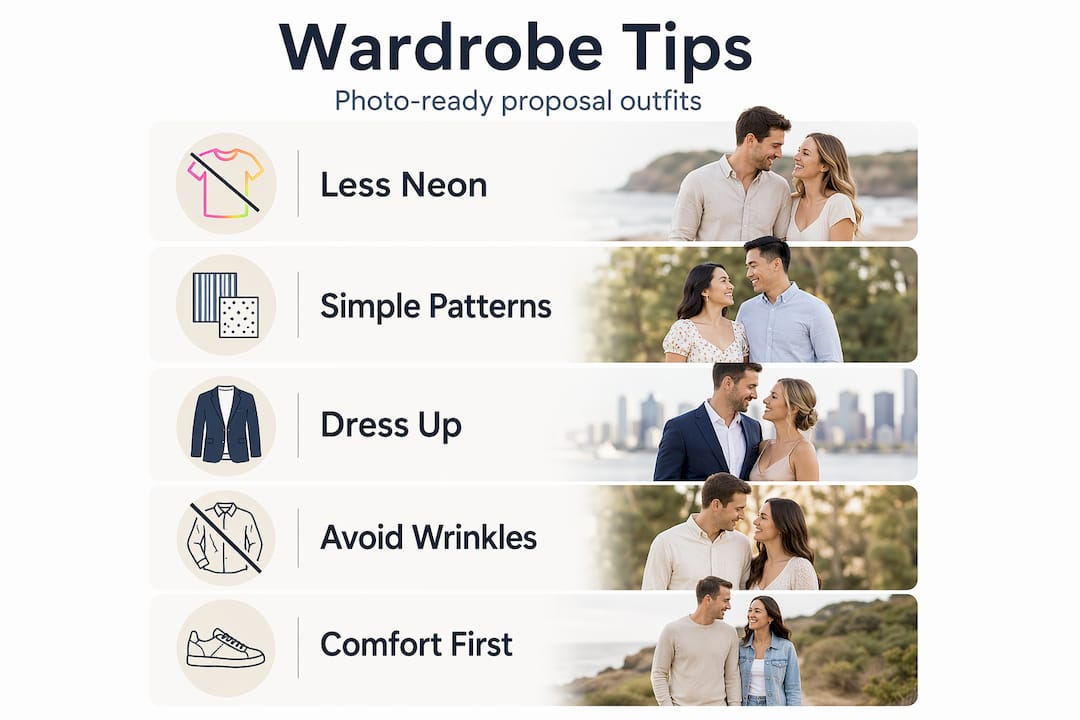
Wear something that feels like you, with a little extra thought if you are heading out for dinner or celebrating a special occasion. You do not need matching outfits or a secret wardrobe change. Comfortable clothes and colours you enjoy will look better than anything that leaves you feeling self-conscious. And if your partner has no idea a photoshoot is coming, there is no need to make their outfit another complicated part of the plan.
Finding the right photographer
Look for someone who has photographed real surprise proposals, not just posed couples sessions. Pay attention to reactions, how discreetly the moment appears to have been covered and whether you like the portraits afterwards. If you are organising a local surprise, an Adelaide surprise proposal photographer can also help you think through likely crowds, lighting and a practical hiding position.
Pro Tip: Ask to see examples of real proposals from start to finish, including the reactions and photographs taken afterwards.
Logistics: arrival, signals, and rehearsals
The big question might last seconds, but a handful of sensible arrangements beforehand can make those seconds far easier to capture.
- Photographer arrival time. Agree on an arrival time that gives your photographer enough room to check the location and settle into position before you appear. How much time they need depends on the setting and whether they know it already.
- Establish your signal. Agree on a subtle cue if it will help, whether that is a phrase, a hand on your partner’s back or a quick message before you arrive. In some locations, a clear approach route and agreed position are all that is needed.
- Walk the approach route. Rehearse, at least mentally, the exact path you will take to reach the proposal spot. Your photographer needs to know which direction you are approaching from so they can position themselves correctly and avoid being seen.
- Build in a backup plan. Rain, crowds, or dramatic changes in light can derail even the most carefully planned shoot. Discuss alternatives ahead of time with your photographer, whether that is a nearby indoor venue or a revised timing if weather changes.
Pro Tip: Send a recent photo of you both and, if possible, a quick update on what you will be wearing. It makes spotting the right couple much easier when other people are wandering around.
Capturing the moment: angles, settings, and authenticity
You do not need to learn camera settings to plan a brilliant proposal. What matters is making sure your photographer has a clear view and can react when the moment happens.
Camera settings for fleeting reactions
Expressions change in an instant, which is why an experienced photographer pays attention to movement, light and the moment just before the question. A fast shutter speed and continuous shooting can help, but there is no single camera setting that guarantees the perfect reaction. The right choices depend on the light and where everyone is standing.
Positioning and lens choice
Sometimes the best hiding spot is quite a distance away with a longer lens; other times it is closer, tucked beside a path or among ordinary visitors. The aim is to see both faces clearly without giving away the surprise. A wider view can also be wonderful when the location itself is part of the story.
The four shots that tell the whole story
A few kinds of photographs help tell the story, although they may not all be possible during those first few seconds:
- Wide establishing shot — sets the scene and location context
- Side-on view — captures both the person kneeling and the partner’s reaction simultaneously
- Ring detail close-up — a lovely detail to capture when there is a chance
- Silhouette or back shot after acceptance — a lovely way to include the atmosphere afterwards
| Shot type | Purpose | What to look for |
|---|---|---|
| Wide establishing | Context and location | Show the place and the couple together |
| Side profile | Dual reaction capture | Keep both expressions in view |
| Ring close-up | Detail and symbolism | Photograph the ring once things settle |
| Silhouette after yes | Emotion and atmosphere | Use the light and surrounding scene |
During the proposal itself, less direction is usually better. The photographer can make decisions about framing and movement while you focus on the person in front of you.
After the yes: post-proposal portraits
Do not rush off the moment the ring goes on. Some of my favourite photographs happen in the minutes afterwards.
The nerves begin to settle, the two of you have a chance to laugh about what just happened, and there is usually a lot of hugging and admiring the ring. Leaving around 20–30 minutes for a relaxed wander and a few photographs gives you space to enjoy it.
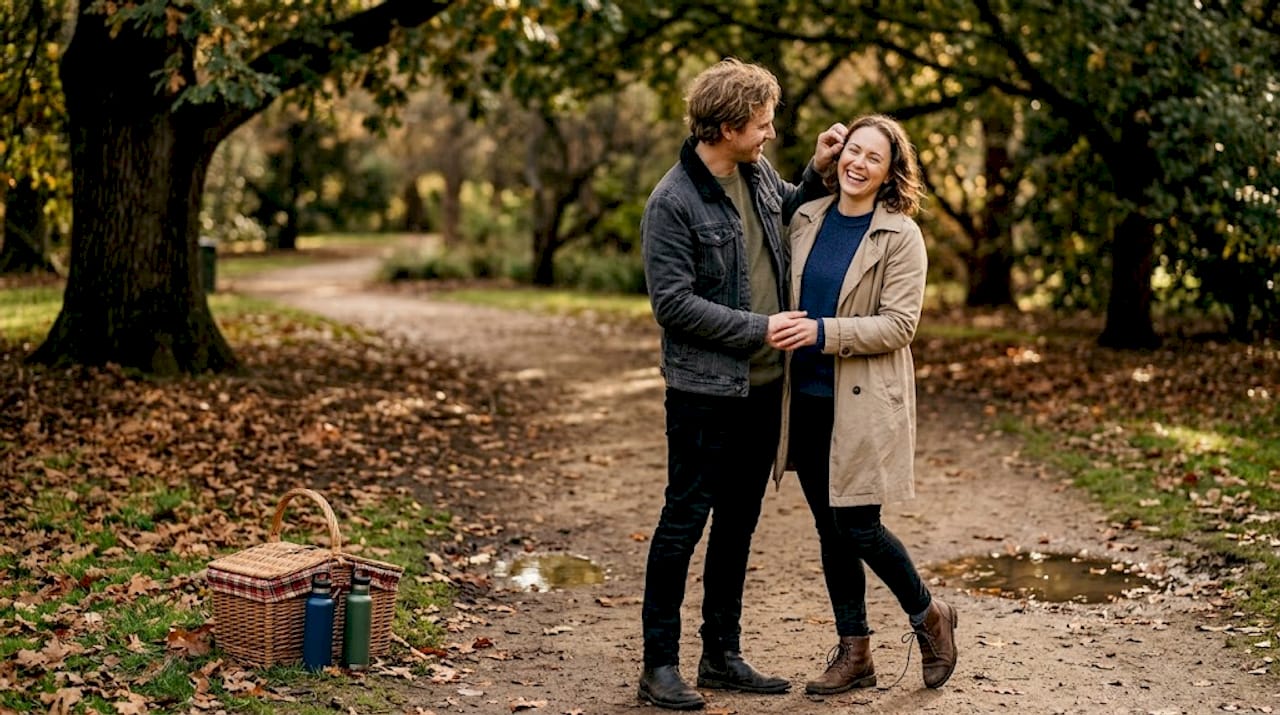
Transition naturally into a brief engagement-style portrait session at the same location. Stay at the same spot initially to maintain mood and visual continuity, then move to one or two nearby areas for variety. You do not need elaborate setups. Walking together, sitting close, looking at the ring, sharing a quiet moment — these are the images couples frame on their walls a decade later.
The balance between guided poses and candid shots matters here. Your photographer might suggest a specific location or ask you to walk in a certain direction, but the expressions within those moments should remain entirely your own.
Pro Tip: Leave a little breathing room in your plans before heading to dinner or meeting family. You will probably want to enjoy the excitement rather than watching the clock.
Common mistakes to avoid
A good proposal plan leaves room for the unexpected. A few things worth thinking about:
- Photographer arriving late or unprepared. There is no recovery if the setup is missed.
- Unclear or untested signals. Make sure you and your photographer understand the cue and arrival plan.
- Crowded or visually noisy locations. Crowds may make discretion harder, so think about a quieter angle or time.
- Clothing that distracts. Comfort and feeling like yourselves matter more than following strict outfit rules.
- Ending the shoot too early. Allow extra time afterwards if you would like some relaxed portraits.
- No contingency for weather. Adelaide weather in particular can shift rapidly. Have a plan B location ready.
What actually matters in proposal photography
I have photographed proposals where every element was meticulously planned, and I have photographed others where something went slightly sideways. What I have noticed is this: the couples who get the most meaningful images are not necessarily the ones with the best-planned shoots. They are the ones who trusted the process and stayed present in the moment.
Authentic emotion beats posed images every single time. I have seen technically perfect proposal shots that feel hollow because the subjects were aware they were being photographed. And I have seen slightly underexposed frames shot in imperfect light that are so full of genuine feeling that they make you tear up.
The best thing you can do is choose a photographer whose instinct is to observe rather than direct, brief them thoroughly, and then let go. Your only job on the day is to be completely present. Great proposal photographs come from a little preparation and the freedom to respond naturally when the moment unfolds.
— Steven
Capture it properly with Svenstudios
At SvenStudios, I love helping people organise surprises that feel personal rather than staged. Whether you are thinking about a quiet spot in the Adelaide Hills, the lights around Elder Park or somewhere important to your relationship, I can help you work through the photography side without spoiling the secret. Have a look through the couples photography portfolio, then explore my surprise proposal photography in Adelaide page to chat about your plans.
FAQ
When should the photographer arrive for a proposal shoot?
They should arrive with enough time to check the setting and be ready before you appear. The exact lead time varies depending on the location and how familiar they are with it.
What is the best time of day for proposal photos?
The period shortly before sunset often produces beautiful warm light, but shaded daytime locations and carefully planned evening proposals can work wonderfully too.
How do I pose for proposal photos without it looking staged?
You do not need to pose at all during the proposal itself. Authentic reactions are always more powerful than directed ones. Save any guided posing for the post-proposal portrait session that follows.
How long should a proposal photoshoot take?
Plan for the proposal moment itself plus at least 20 to 30 minutes of portraits afterwards. That post-proposal window captures the raw emotion and joy that makes the full visual story complete.
What signal system works best between proposer and photographer?
A simple phrase, discreet gesture or pre-arrival message can work well. Choose something that feels natural and confirm it with your photographer beforehand.
Recommended
Love this style of photography?
Planning something beautiful?