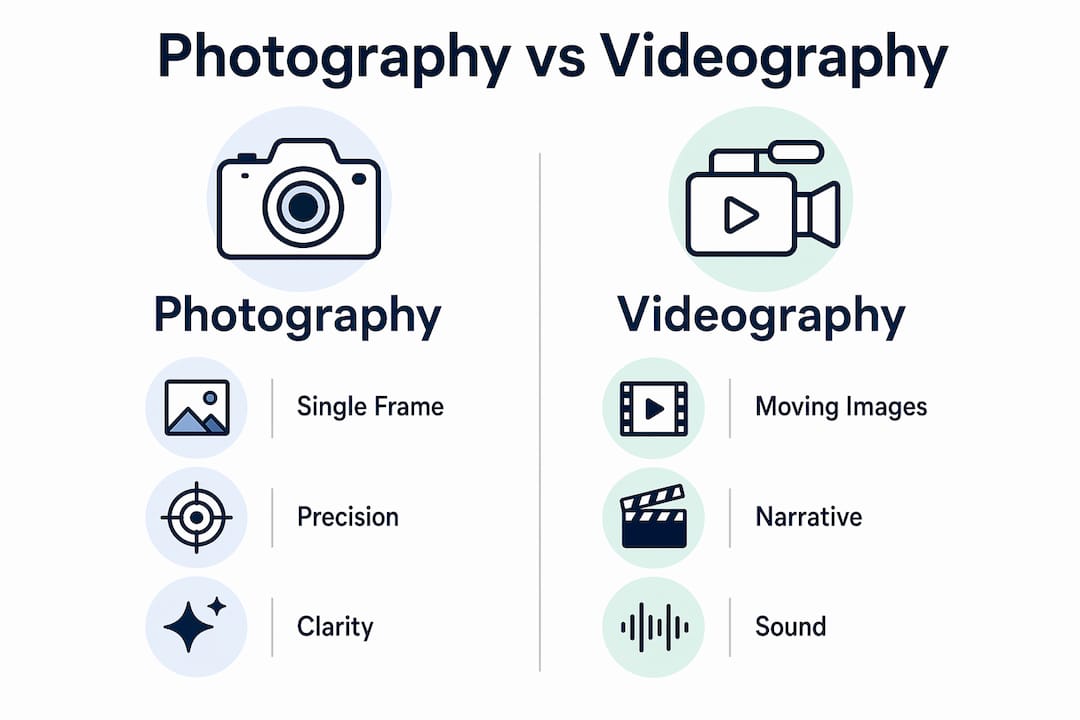
Photography is defined as the art of capturing a single, static moment with precision and clarity, while videography records moving images combined with sound to narrate events over time. Understanding the difference between photography and videography helps you make smarter choices when planning weddings, events, or any project where storytelling matters. Both media serve distinct purposes, require different skills, and produce very different results. Knowing which one fits your needs, or whether you need both, can save you money and deliver far stronger memories.
What is the core difference between photography and videography?
Photography freezes a decisive instant. A single frame carries composition, light, and emotion in one precise image. Videography, by contrast, builds meaning through motion, sound, and sequence over time. Think of a wedding ceremony: a photograph captures the exact moment tears appear on a father’s face, while a video records his voice cracking as he speaks. Both are powerful. They just work differently.
Still images extracted from video footage lack the sharpness and precise composition of professionally shot photographs. Video frames often freeze motion, producing softer, less polished images. This is why you cannot simply hire a videographer and expect publication-quality photos from the footage.
Photography excels at clarity and long-term brand value, making it ideal for website galleries, printed assets, and marketing materials. Video drives higher emotional engagement but demands more resources to produce well.
How do equipment and technical requirements differ?
The gear gap between photography and videography is significant, and it shapes the entire workflow for each medium.
Photography essentials:
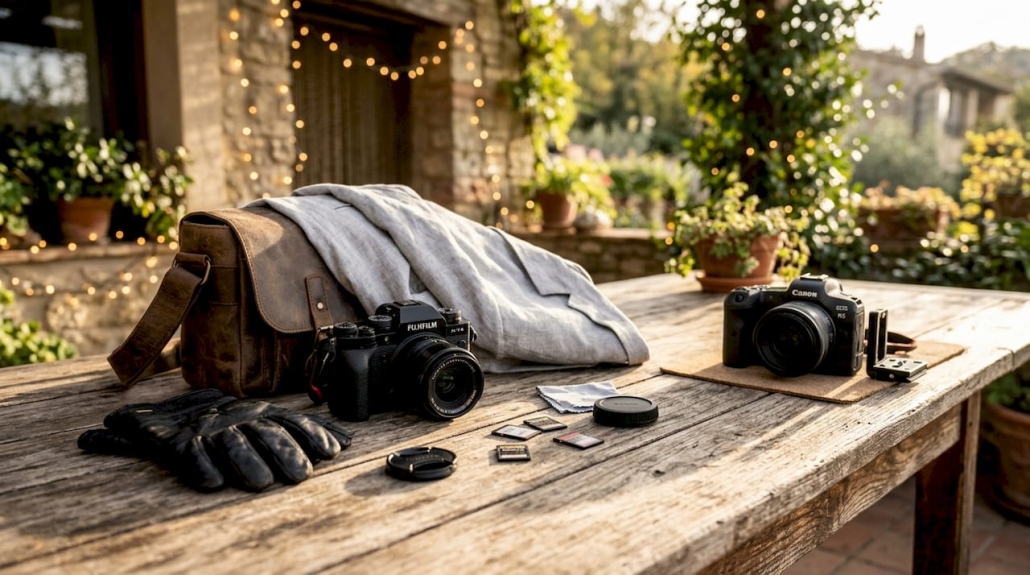
- A DSLR or mirrorless camera body (such as a Sony A7 series or Canon R series)
- A selection of prime and zoom lenses suited to different lighting conditions
- A fast memory card and portable flash or reflector
- Photo editing software like Adobe Lightroom or Capture One for post-production
Videography essentials:
- A cinema or hybrid mirrorless camera capable of recording high-quality video
- Gimbals and tripods for stabilised movement
- External audio recorders or lapel microphones for clean sound capture
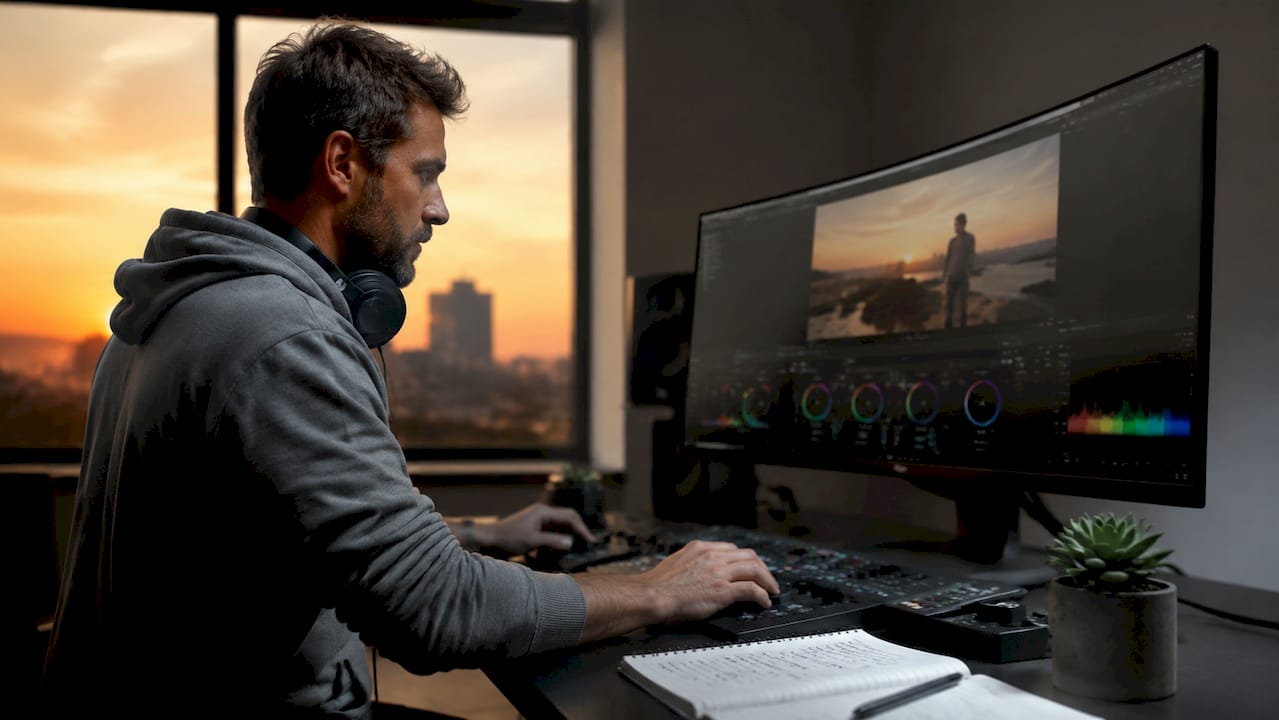
- Video editing software like Adobe Premiere Pro or DaVinci Resolve for timeline-based editing
Photo editing focuses on individual frame control, while video editing involves sequencing, sound design, and colour grading across time. Video post-production is considerably more complex. A photographer might spend 20 minutes editing a single image. A videographer might spend 20 hours cutting a five-minute highlight film.
Pro Tip: If you are hiring for a wedding or event, ask each professional to show you their post-production process. The editing workflow reveals just as much about their skill as the camera they carry.
What creative mindset separates photographers from videographers?
The psychological difference between the two crafts is rarely discussed, but it matters enormously.
Photography requires aggressive precision. Photographers pursue the “decisive moment,” a term coined by Henri Cartier-Bresson to describe the split second when composition, light, and emotion align perfectly. Miss it by half a second and it is gone. This creates a hunting instinct. Photographers move fast, reposition constantly, and anticipate action before it happens.
Videography demands something closer to watchful patience. A videographer observes scenes unfolding, focusing on rhythm and continuity rather than a single peak moment. They construct meaning over time, letting sequences breathe and allowing sound to carry emotional weight.
“Photography demands an instinctive hunt for the perfect moment, whereas videography requires watchful patience to construct meaning over time and through sequence.” — Photography vs Video: Predator or Voyeur?
Many photographers moving to video fail because videography requires thinking about time, flow, and sound, not just capturing pretty frames. The skills overlap in some areas, but the creative instincts are genuinely different. Recognising this distinction helps you understand why specialists in each medium tend to produce better results than generalists trying to do both.
Pro Tip: When reviewing a videographer’s portfolio, watch for how they use sound and pacing, not just visual beauty. A great wedding film feels emotionally complete even with your eyes closed.
When should you choose photography, videography, or both?
Matching the medium to your goals is the most practical decision you will make.
Choose photography when you need:
- Website galleries and social media profile images with sharp, polished visuals
- Printed materials such as invitations, albums, and wall art
- Marketing assets with a long shelf life across multiple platforms
- Detailed, high-resolution images for B2B decision-making contexts
Choose videography when you need:
- Emotional storytelling through motion, voice, and ambient sound
- Highlight reels for weddings, corporate events, or product launches
- Social media content aimed at younger audiences who prefer video
- Interviews, performances, or speeches where audio is central to the message
Younger demographics prefer video on social media, while B2B audiences favour photographs for detailed decision-making. This means your audience and platform should directly influence your choice.
| Scenario | Best Medium | Key Reason |
|---|---|---|
| Wedding ceremony | Both | Photos for albums; video for vows and speeches |
| Corporate headshots | Photography | Clarity and reuse across print and digital |
| Product launch event | Videography | Storytelling and social media engagement |
| Family portrait session | Photography | Printed keepsakes and wall art |
| Live performance | Videography | Motion and sound are central to the experience |
Booking both photography and videography without clear goals often results in weak coverage for both. Define your deliverables before you book. Knowing exactly what you want to do with the content afterwards makes every other decision easier. You can find practical guidance on this in our choosing event photographers guide.
How do physical demands differ on the day?
The way photographers and videographers move through an event is noticeably different, and it affects the coverage you receive.
Photographers on the day:
- Work reactively and handheld, repositioning frequently for the best angle
- Cover more ground across a venue, capturing candid moments from multiple perspectives
- Operate with minimal setup time, making them agile during fast-moving events
- Rarely need to communicate with subjects during a shot
Videographers on the day:
- Use tripods, gimbals, and external audio equipment, making movement more deliberate
- Require more time to set up and reposition between locations
- Must manage audio capture, which limits how close they can stand to speakers or music
- Often need to plan shot sequences in advance rather than react spontaneously
The physicality of videography means the shooter’s movement and setup constraints shape the narrative. A videographer who has not walked the venue beforehand will struggle to capture smooth, intentional sequences. A photographer can adapt on the fly far more easily. Understanding these differences helps you set realistic expectations for what each professional can deliver during a busy event. For a deeper look at what videographers actually do on the day, the wedding videographer roles explained resource covers this in detail.
Key takeaways
Photography and videography serve fundamentally different storytelling purposes, and choosing the right medium requires clarity on your goals, audience, and how you plan to use the content.
| Point | Details |
|---|---|
| Core distinction | Photography freezes a single moment; videography builds narrative through motion and sound over time. |
| Equipment complexity | Videography requires more gear, including gimbals and audio equipment, making it less agile than photography. |
| Creative mindset | Photographers hunt decisive moments; videographers observe sequences with patience and narrative intent. |
| Choosing the right medium | Define deliverables first; photography suits print and galleries, while videography suits emotional storytelling. |
| Physical demands | Photographers reposition freely; videographers plan movements carefully around stabilisation and audio needs. |
My honest perspective on choosing between the two
As someone who has spent years photographing and filming weddings in Adelaide, I have seen couples make the same mistake repeatedly. They book both photography and videography as an afterthought, without thinking about what they actually want to do with the content. The result is often a mediocre set of photos and a highlight film that feels rushed.
My honest view is this: one medium done exceptionally well beats two done adequately. If you are working with a limited budget, decide what matters most to you. Do you want images you can print and hang on your wall for decades? Go with photography. Do you want to relive the sound of your vows and the laughter of your guests? Invest in videography.
When you do choose both, make sure each professional understands the other’s role. A photographer who works alongside a videographer without coordination will end up in each other’s shots. Communication before the event is not optional. It is what separates a smooth, well-covered day from a chaotic one.
The importance of photography and videography together is real, but only when both are planned with intention.
— Steven
Capture your story with Svenstudios
At Svenstudios, Steven and Luisa specialise in authentic wedding photography and videography for couples across Adelaide and beyond. Their approach is relaxed, candid, and deeply personal. Every package is built around your story, not a generic template. Whether you are after stunning still images, a cinematic highlight film, or both, Svenstudios offers tailored coverage that reflects who you actually are as a couple. Explore the full range of Adelaide wedding videography services and find the combination that fits your day perfectly.
FAQ
What is the main difference between photography and videography?
Photography captures a single, static moment with precision, while videography records moving images and sound over time to tell a story. The two media require different equipment, editing workflows, and creative mindsets.
Can a videographer also take photos at an event?
Technically yes, but still images extracted from video footage lack the sharpness of professionally shot photographs. For quality results across both formats, hiring dedicated specialists for each medium is the better approach.
Which is better for a wedding: photography or videography?
Both serve different purposes at a wedding. Photography produces polished images for albums and print, while videography captures voices, music, and movement that photos cannot replicate. Many couples choose both when budget allows.
Is videography harder to learn than photography?
Videography involves a more complex workflow, including audio management, stabilisation, and timeline-based editing. Photographers moving into video often underestimate how much the craft differs beyond simply pressing record.
How do i decide which one to book for my event?
Define your deliverables first. If you need printed assets and gallery images, prioritise photography. If emotional storytelling and social media content are the goal, videography is the stronger choice. Clear goals prevent budget waste and weak coverage.
Recommended
Love this style of photography?
Planning something beautiful?