The difference between candid and posed wedding photos is straightforward. Candid photography captures genuine, unplanned moments as they unfold naturally. Posed photography involves deliberate direction from the photographer to create polished, structured compositions. Most modern weddings use a hybrid approach, blending roughly 80–90% candid images with 10–20% posed portraits. Understanding both styles helps you make confident decisions about your wedding photography and what your finished album will actually feel like to look through.
What is the difference between candid and posed wedding photos?
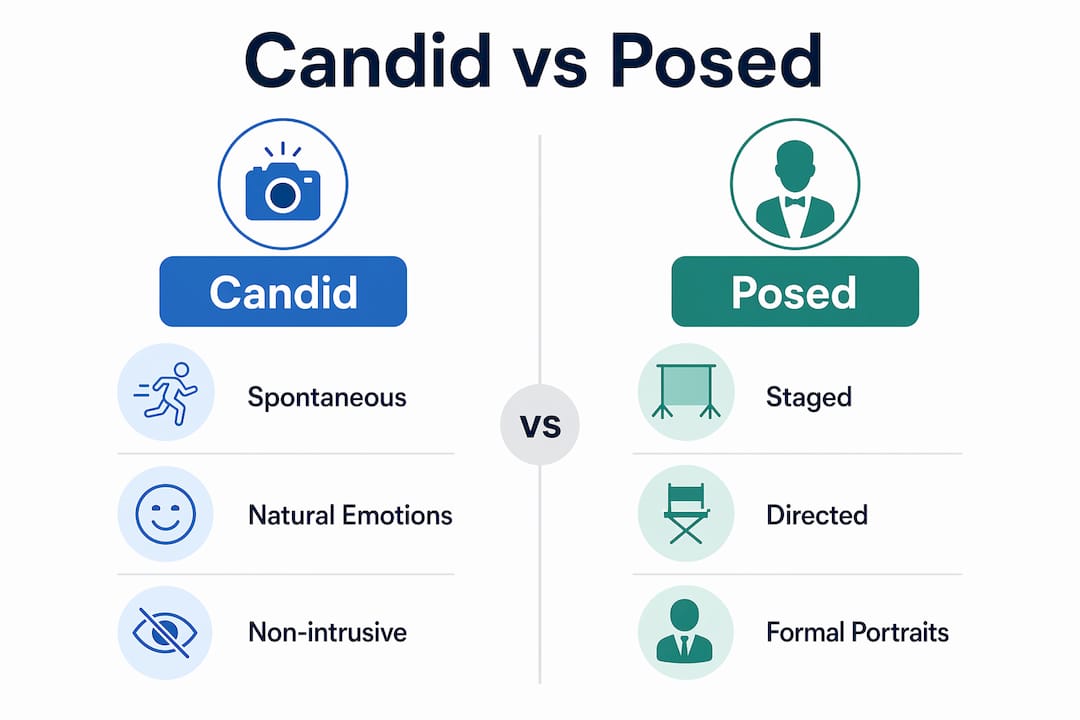
Candid photography is non-staged and observational; posed photography relies on professional direction to arrange subjects deliberately. That single distinction shapes everything else about how each style is shot, how it feels to be photographed, and what the final images communicate.
Candid images capture the laugh your mum lets out when you walk down the aisle. Posed images capture you and your partner looking your absolute best against a golden-hour backdrop. Neither is superior. They serve different emotional and practical purposes, and the best wedding albums contain both.
The industry term for candid-dominant wedding photography is documentary style, sometimes called photojournalistic wedding photography. You will hear these terms used interchangeably. Knowing the standard vocabulary helps when you are reading photographer websites or comparing packages.
What is candid wedding photography and how is it captured?
Candid wedding photography is a documentary-style, non-intrusive approach that captures genuine moments as they happen, without staging or direction. The photographer acts as an observer, staying close enough to catch the action but far enough away to avoid influencing it.
The emotional payoff is significant. Candid photography lets couples relive the emotion and movement of their day in a way that heavily posed imagery simply cannot replicate. That shift reflects a broader preference for authentic storytelling over photo performance. This approach can also suit destination wedding photography.
Key qualities of candid wedding photography include:
- Observation over direction. The photographer anticipates moments rather than creating them.
- Emotional authenticity. Tears, laughter, and spontaneous gestures are the subject matter.
- Natural movement. Images show people in motion, not frozen in a formal stance.
- Unobtrusive technique. Long lenses and quiet positioning keep the photographer invisible.
- Timing and reflexes. Candid photography is high-risk and relies on anticipation; a missed moment cannot be recreated.
One common misconception is worth addressing directly. Many couples think candid means no direction at all. Experienced photographers actually use what is called quiet steering, which means subtle prompts and gentle positioning that improve the shot without traditional posing. The result looks completely natural because it largely is.
Pro Tip: Ask your photographer how they handle quiet steering. A skilled practitioner will describe specific, low-key techniques rather than vague promises about “capturing the moment.”
What characterises posed wedding photos and their role on the day?
Posed wedding photography involves careful staging, deliberate positioning, and professional direction to achieve flattering, polished compositions. The photographer takes an active role in arranging subjects rather than observing them. This approach gives far more control over lighting, backgrounds, and the overall look of the image.
Posed photography is not about stiffness or artificiality. Professional posing empowers couples through gentle direction that enhances comfort and confidence without draining authenticity. A skilled photographer guides hands, adjusts angles, and manages group dynamics so that everyone looks relaxed and natural within a structured frame.
Posed photography is most valuable for:
- Family portraits. Managing large groups requires clear direction to avoid awkward limbs and missed faces.
- Formal couple portraits. These are the images most couples frame and display at home.
- Challenging conditions. When lighting or backgrounds are difficult, posing gives the photographer control to compensate.
- Timeless keepsakes. Polished, composed images tend to age well and remain prized long after the day.
Posed photos involve careful lighting and guiding hands and bodies, and they are particularly important for family and group shots where spontaneity would produce chaos rather than charm.
Pro Tip: Schedule your formal portraits during the natural break between ceremony and reception. This keeps the session efficient and leaves the rest of your day free for genuine moments.
Candid vs posed: a side-by-side comparison
The table below clarifies the core differences across the most practical dimensions couples care about.
| Feature | Candid photography | Posed photography |
|---|---|---|
| Goal | Capture spontaneous, genuine emotion | Create polished, flattering compositions |
| Photographer role | Observer and anticipator | Director and arranger |
| Couple experience | Relaxed, often unaware of the camera | Actively involved, guided through positions |
| Best used for | Ceremony, reception, candid interactions | Family portraits, couple portraits, group shots |
| Emotional tone | Raw, authentic, story-driven | Elegant, timeless, confident |
| Technical challenge | High. Relies on timing and reflexes | Moderate. More control over conditions |
| Typical album share | 80–90% of final gallery | 10–20% of final gallery |
The table shows why neither style alone produces a complete wedding album. Pure candid coverage risks missing the formal portraits couples want to display. Pure posed coverage produces a gallery that feels staged and emotionally flat.
How do couples balance candid and posed photos for a complete album?
The best wedding galleries blend both styles, because pure candid may miss formal photos and pure posed may feel stiff. The industry standard in 2026 is a hybrid approach: approximately 80–90% candid images and 10–20% posed portraits. That ratio reflects what most couples actually want when they look back at their album years later.
Here is how to approach the balance practically:
- Allocate portrait time deliberately. Most wedding days reserve 30–45 minutes for formal portraits. Protect that window in your timeline and communicate it clearly to your photographer.
- Prioritise your must-have posed shots. Write a short list of essential family groupings and couple portraits before the day. Your photographer can work through these efficiently without eating into candid coverage time.
- Let candid moments happen around the structure. The ceremony, speeches, first dance, and reception are rich with genuine emotion. A skilled photographer captures these without interruption.
- Consider a second shooter. A second photographer is critical for capturing simultaneous candid emotional reactions, particularly during the ceremony when both partners and guests are reacting at once.
- Communicate your preferences clearly. Tell your photographer whether you lean towards documentary storytelling or editorial polish. The growing trend is intentional, efficient posing combined with natural candid moments, so most photographers are already working this way.
Pro Tip: Review your photographer’s full wedding galleries, not just their highlight shots. A gallery shows you the real balance of candid and posed work they deliver, which is far more informative than a curated portfolio of their best ten images.
Key takeaways
The most effective wedding photography approach blends documentary candid coverage with intentional posed portraits, with roughly 80–90% candid and 10–20% posed images forming the industry standard.
| Point | Details |
|---|---|
| Core distinction | Candid captures natural moments; posed involves deliberate direction from the photographer. |
| Candid style | Uses quiet steering and observation to produce authentic, emotion-driven images. |
| Posed style | Delivers polished, flattering portraits ideal for family groups and formal couple shots. |
| Ideal blend | Industry standard is 80–90% candid and 10–20% posed for a complete, balanced album. |
| Choosing a photographer | Review full wedding galleries to assess the real balance of both styles before booking. |
What I have learned after years of shooting both styles
As an experienced wedding photographer, I have watched couples tie themselves in knots over photography labels. They come to consultations asking for “purely candid” or “fully documentary” photography, and what they actually mean is that they want to feel relaxed and look genuine. That is a completely reasonable goal. But the label is not the answer.
The truth is that the distinction between candid and posed is less about rigid categories and more about how a photographer reads a room and responds to it. I have seen beautifully posed portraits that feel completely alive, and I have seen candid galleries that feel cold and disconnected because the photographer never built rapport with the couple.
My honest advice is this: stop searching for a photographer who promises one style exclusively. Look at their full galleries. Ask how they handle the portrait session. Ask whether they use a second shooter. Experts advise couples to focus on actual wedding galleries over industry buzzwords, and that advice holds up every time. The best photographers adapt. They know when to step back and observe, and they know when to step in and guide. That balance is the skill worth paying for.
— Steven
How Svenstudios captures your whole wedding story
At Svenstudios, Steven and Luisa bring a documentary heart and an editorial eye to every wedding they photograph. Their approach blends genuine, unplanned moments with thoughtful, efficient portrait sessions so your album tells the full story of your day. Whether you are planning an intimate Adelaide ceremony or a destination wedding in New Zealand, the team adapts to your preferences and your timeline. A second shooter option means no moment goes uncovered, even when the ceremony and the guests are reacting simultaneously. If you are ready to see how both styles work together in practice, explore Svenstudios’ wedding photography approach or browse the full portfolio to find your perfect fit.
FAQ
What is the main difference between candid and posed wedding photos?
Candid photos capture genuine, unplanned moments without direction from the photographer. Posed photos involve deliberate arrangement of subjects to create polished, structured compositions.
Which wedding photo style do most couples choose?
Most couples use a blend of both styles. The industry standard is approximately 80–90% candid images and 10–20% posed portraits in a finished wedding gallery.
Does candid wedding photography mean no direction at all?
No. Experienced photographers use quiet steering, which means subtle prompts and gentle positioning that improve the shot without traditional posing. The results look natural because the direction is minimal and unobtrusive.
How long does a posed portrait session take on a wedding day?
Most wedding timelines reserve 30–45 minutes for formal portraits. Efficient photographers work through family groupings and couple portraits within that window, leaving the rest of the day free for candid coverage.
How do I know if a photographer is good at both styles?
Review their full wedding galleries rather than highlight portfolios. A complete gallery reveals the real balance of candid and posed work they deliver, which gives you a far more accurate picture of their actual approach.
Recommended
- Authentic Wedding Photography For Your True Love Story
- Planning Natural Wedding Portraits: Candid Photography Tips
- Your Ultimate Wedding Photography Checklist For Authentic Moments
- Discover Documentary Style Photography For Authentic Wedding Memories
Love this style of photography?
Planning something beautiful?