• Shopping Cart Shopping Cart
    0Shopping Cart
SvenStudios
  • ABOUT US
    • WHO ARE WE?
    • TESTIMONIALS
  • WEDDING PACKAGES
    • ADELAIDE PACKAGES
    • AUSTRALIA-WIDE PACKAGES
    • NZ-WIDE PACKAGES
  • SERVICES
    • WEDDING PHOTOGRAPHY
      • ADELAIDE WEDDINGS
      • DARWIN WEDDINGS
      • CANBERRA WEDDINGS
      • HOBART WEDDINGS
      • PERTH WEDDINGS
      • QUEENSTOWN, NZ WEDDINGS
      • WORLDWIDE
    • WEDDING VIDEOGRAPHY
    • FAMILY PHOTOGRAPHY
    • NEWBORN PHOTOGRAPHY
    • COUPLES & ENGAGEMENTS
    • PHOTOBOOTH HIRE
    • HAPPLEE QR
    • SELFBOOTH
    • SEATSCAN
    • AUDIO GUEST BOOK HIRE
    • LIVE STREAM
  • PORTFOLIO
    • WEDDING PHOTOGRAPHY
      • SORT BY WEDDING VENUE
    • COUPLES PHOTOGRAPHY
    • FAMILY PHOTOGRAPHY
    • NEWBORN PHOTOGRAPHY
  • BLOG
  • SHOP
    • BOUQUET CHARMS
    • HAND MADE ITEMS
    • GIFT CARDS
    • DIGITISATION SERVICES
      • SUPER8 TO DIGITAL
      • VHS TO DIGITAL
    • PAY AN INVOICE
  • CONTACT
  • Menu Menu
Interesting

The role of editing in wedding videos explained

Editing is the process that transforms raw wedding footage into a cinematic story couples can relive for the rest of their lives. Post-production in wedding films controls pacing, music, sound design, colour grading, and clip order to shape how viewers feel, not just what they see. Without skilled editing, even the most beautifully filmed wedding becomes a collection of disconnected clips. Tools like DaVinci Resolve and Adobe Premiere Pro give editors precise control over every frame, but the real craft lies in the emotional decisions behind each cut. This article explains how editing enhances wedding videos and what both couples and videographers need to know.

What key functions does editing perform in wedding videos?

The role of editing in wedding videos goes well beyond trimming clips. Editing shapes emotional peaks rather than presenting footage chronologically, building a narrative arc from the quiet anticipation of preparation through to the joy of the reception. That structure is what makes a wedding film feel like a story rather than a recording.

The core editing functions include:

  • Narrative arrangement: Sorting footage into a meaningful sequence, typically preparation, ceremony, speeches, and reception, so the film has a clear emotional journey.
  • Audio balancing: A dedicated audio pass focuses on noise reduction, equalisation, compression, and levelling to keep vows and speeches clear while music sits underneath without overpowering dialogue.
  • Colour correction and grading: Editors harmonise footage from multiple cameras and lighting conditions to achieve consistent skin tones and a unified visual style, often using LUTs as reference looks.
  • Pacing: Highlight shot lengths of around 6 to 10 seconds or montage cuts every 1 to 2 seconds at 90 to 110 BPM give the film a cinematic rhythm that matches its emotional tone.
  • Moment selection: Choosing the glance, the laugh, the quiet tear rather than every available angle is where emotional intelligence separates a good editor from a great one.

Pro Tip: Ask your videographer to show you examples of their pacing style before the wedding. A film that feels too fast or too slow is almost impossible to fix after delivery.

How does editing enhance the emotional experience of wedding videos?

Couple reviewing wedding video pacing on laptop

Emotional wedding films are crafted, not assembled. Editing shapes how viewers encode memories and feel the story, which means every cut, pause, and musical swell carries psychological weight. The difference between a film that makes people cry and one that simply documents events often comes down to timing decisions measured in fractions of a second.

Pacing is the most underestimated tool in this process. Letting a moment breathe, holding on a face for two seconds longer than feels comfortable, creates space for the viewer to feel something. Rushing through every shot in search of visual variety is one of the most common mistakes in wedding video editing, and it drains the emotional life out of the footage.

Silence is one of the most powerful storytelling tools available to a wedding editor. Dropping the music entirely before a key vow or speech line draws the viewer in and makes the moment feel real and unguarded.

Music selection is a deliberate narrative decision, not a playlist choice. Tempo, key, instrumentation, and volume all influence viewer mood, and the best editors treat music as a structural element that supports the story rather than decorates it. A track that peaks emotionally at the wrong moment can undercut even the most beautiful footage. Focusing on faces and subtle reactions, a nervous smile before the vows, a parent wiping their eyes during the first dance, gives viewers someone to connect with and deepens their empathy throughout the film.

What are the professional workflows and typical timelines for wedding video editing?

A professional wedding video editing workflow follows a consistent sequence regardless of the software used. Understanding this process helps couples set realistic expectations and helps videographers communicate their value clearly.

  1. Footage ingestion and organisation: All camera cards and audio recorders are backed up and organised by camera angle, time of day, and scene before any editing begins.
  2. Multi-camera sync: Sorting, arranging, and syncing audio from multiple cameras ensures no important moment is missed across large volumes of footage.
  3. Rough cut: The editor builds the film’s structure, selecting the best takes and arranging them into a narrative sequence.
  4. Audio pass: Noise reduction, equalisation, and music placement are handled as a dedicated step before colour work begins.
  5. Colour grade: Reference LUTs or presets are applied to achieve visual consistency across all cameras.
  6. Quality check and client review: The editor reviews pacing, audio clarity, and colour consistency before the couple sees the film.
  7. Delivery: Final export in agreed formats for web, social media, and archival use.
Delivery type Typical turnaround
Standard wedding film 3 to 5 weeks
Express delivery 24 to 48 hours

Standard turnaround runs 3 to 5 weeks, while express services can deliver in 24 to 48 hours when editorial decisions on music and style are resolved in advance. Express delivery without pre-resolved decisions almost always results in revisions and delays, which defeats the purpose.

How can couples and videographers collaborate effectively on editing?

Infographic showing wedding video editing timeline steps

Clear communication before the wedding saves significant time and frustration during post-production. The editing process works best when both the couple and the videographer arrive at it with shared expectations about style, pacing, and deliverables.

Here is what makes collaboration work well:

  • Define the editing style early. Share reference films that reflect the tone you want, whether that is cinematic and slow-paced or upbeat and energetic. Vague descriptions like “emotional but fun” leave too much open to interpretation.
  • Provide concrete references. LUT files and pacing notes reduce style drift and give editors measurable targets rather than subjective impressions. This is the highest-leverage step for consistent results in multi-camera weddings.
  • Understand the deliverables. Separating highlight reels, full ceremony films, and social media cuts into distinct projects reduces errors and keeps timelines organised during audio and colour passes.
  • Prepare your music preferences in advance. Licensing matters, so discuss whether you want original compositions, licensed tracks through services like Musicbed or Artlist, or a specific song that requires clearance.
  • Give structured feedback. Timestamped notes are far more useful than general comments. “The section from 2:10 to 2:45 feels too fast” is something an editor can act on immediately.

Pro Tip: If you are working with a separate editor rather than your videographer, share a short style guide document before footage is delivered. Even a one-page brief covering tone, music preferences, and key moments to include will cut revision rounds significantly.

Key takeaways

Skilled post-production in wedding films is the single greatest factor separating a forgettable recording from a film couples will watch for decades.

Point Details
Editing creates the narrative Footage arranged by emotional arc, not chronology, is what makes a wedding film feel like a story.
Audio quality defines immersion A dedicated audio pass for noise reduction and levelling preserves vows and speeches as the emotional core of the film.
Pacing is measurable Shot lengths of 6 to 10 seconds and cut frequency targets give editors objective tools for consistent cinematic rhythm.
Collaboration reduces revisions Providing LUTs, pacing references, and structured feedback before editing begins saves time and improves results.
Turnaround depends on preparation Standard delivery takes 3 to 5 weeks; express turnaround requires all editorial decisions resolved in advance.

Why editing is where the real storytelling happens

As someone who has filmed and edited weddings across Adelaide and South Australia for years, I can tell you honestly that the camera captures what happened. Editing decides what it means.

I have seen beautifully filmed weddings fall flat because the edit was rushed or technically inconsistent. And I have seen modest footage become genuinely moving films because the editor understood professional editing as a craft of emotional intention, not just technical assembly. Professional editing distinguishes itself through pacing, sound, and colour consistency rather than flashy effects or transitions. That is the part most people do not see, and it is the part that matters most.

What I would encourage every couple to think about is this: your wedding film is not a documentation project. It is a memory object. The way it is edited determines how you will feel when you watch it in ten years. Prioritising that investment, choosing a videographer who takes post-production as seriously as filming, is one of the most worthwhile decisions you can make in the whole planning process.

— Steven

Capture your story with Svenstudios

At Svenstudios, Steven and Luisa approach every wedding film with the same care they bring to filming: thoughtful, personal, and built around the moments that actually matter to you. Every package includes professional post-production with deliberate pacing, music selection, and colour grading tailored to your story. You can explore wedding highlight films crafted to preserve the emotion of your day, or browse the full range of Adelaide videography packages to find the right fit. If you would like to talk through your vision or view sample films, get in touch and we will walk you through the process from filming to final delivery.

FAQ

What does editing actually do in a wedding video?

Editing arranges footage into a narrative arc, balances audio, applies colour grading, and controls pacing to shape the emotional experience of the film. It is the process that turns raw clips into a story rather than a recording.

How long does wedding video editing take?

Standard wedding video editing takes 3 to 5 weeks from footage delivery to final film. Express services can deliver in 24 to 48 hours when music choices and editing style are confirmed before post-production begins.

What should couples provide to help the editing process?

Couples should share reference films for tone and pacing, confirm music preferences and licensing, and identify key moments they want included. Structured, timestamped feedback during the review stage also reduces revision rounds significantly.

Does music choice really affect the final film?

Music tempo, key, instrumentation, and volume directly influence how viewers feel throughout the film. A track that peaks at the wrong moment can undercut even the most beautifully filmed footage, so music selection is treated as a structural narrative decision, not a stylistic afterthought.

What is the difference between a highlight reel and a full wedding film?

A highlight reel is typically 3 to 7 minutes long and focuses on the emotional peaks of the day, edited to music with a cinematic rhythm. A full wedding film includes complete ceremony and speech footage and runs considerably longer, preserving the day in greater detail.

Recommended

  • Wedding Highlight Films: Capture Your Story In Moments
  • What Is A Virtual Reality Wedding Video?
  • Wedding Videographer Roles Explained For Your Adelaide Film
  • Why Hire A Wedding Videographer For Your Adelaide Wedding
June 8, 2026/by Steven Duncan
Interesting

What is a wedding portfolio? A couple’s guide

A wedding portfolio is a curated set of images designed to prove a photographer’s real wedding-day capability, not simply a scrapbook of their favourite shots. When you’re searching for the right photographer on platforms like Instagram, Squarespace-hosted websites, or dedicated photography galleries, the portfolio is the primary tool that tells you whether this person can actually handle your wedding. It shows consistency of style, adaptability to real conditions, and coverage across the full day. Understanding what a wedding portfolio is, and what to look for inside one, makes the difference between a confident booking and a costly guess.

What is a wedding portfolio and how does it differ from other samples?

A wedding portfolio is a photographer’s most carefully selected body of work, chosen to demonstrate skill, consistency, and range across real wedding conditions. It is distinct from other types of visual content you might encounter during your search, and knowing the difference helps you make a sharper comparison.

A full wedding gallery shows every image delivered from a single event, from the getting-ready shots through to the last dance. A blog post tells the story of one wedding with a narrative flow, often including the couple’s names, venue details, and a written account of the day. A highlight reel, by contrast, is simply a collection of striking or personally meaningful images with no guarantee of consistent style or coverage.
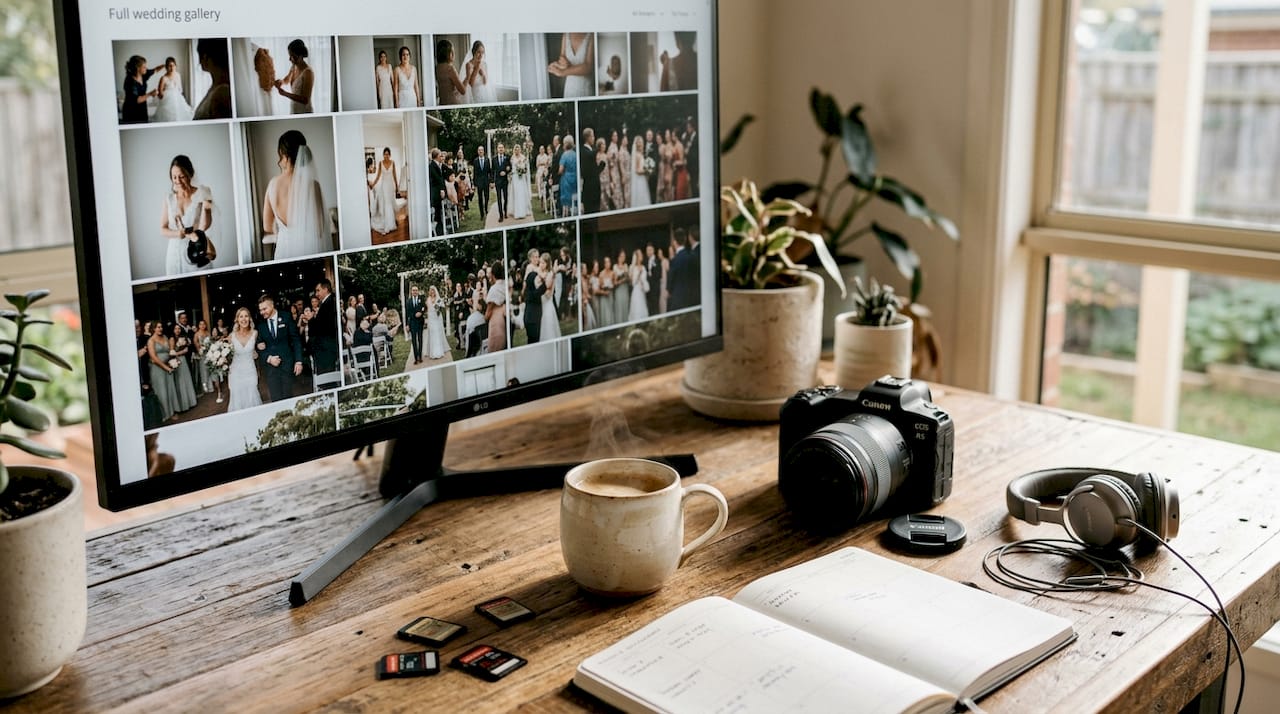
Photographer's desk showing full wedding gallery on screen

The portfolio sits above all of these for decision-making purposes. It is the photographer’s deliberate statement: “This is what I do, and this is how well I do it.” Where a highlight reel might dazzle with one extraordinary sunset portrait, a portfolio should reassure you that the photographer can also handle a dimly lit reception room, a fast-moving ceremony, and quiet in-between moments with equal confidence.

Format Purpose What it shows
Wedding portfolio Curated proof of capability Consistent style, range, and skill
Full gallery Complete event delivery Every image from one wedding
Blog post Narrative storytelling One wedding told as a story
Highlight reel Personal favourites Striking images, not necessarily consistent

When you are shortlisting photographers, the portfolio is your primary reference point. Use the other formats to confirm what the portfolio already suggests. For more information, see our Adelaide wedding photographers.

What should be in a wedding portfolio?

A strong wedding photography portfolio covers the full arc of a wedding day, not just the glamorous moments. Adorama’s guidance outlines that portfolios should demonstrate ceremony coverage, reception moments, formal portraits, and fine detail shots such as rings, florals, and table settings. This breadth tells you the photographer understands the whole event, not just the photogenic highlights.

Beyond coverage, look for these qualities:

  • Lighting adaptability. The portfolio should include images from low-light receptions, bright outdoor ceremonies, and indoor venues with mixed or artificial light. A photographer who only shines in golden-hour conditions will struggle at your evening reception.
  • Motion and spontaneity. Look for natural, unposed moments such as laughter during speeches, a parent wiping away tears, or guests caught mid-dance. These images reveal the photographer’s ability to anticipate and react.
  • Consistent editing style. Colour grading, contrast, and tone should feel cohesive across images. Jarring shifts between warm and cool tones, or between sharp and heavily processed images, suggest an inconsistent approach.
  • Portrait quality. Formal portraits of the couple should feel relaxed and genuine, not stiff. Clients want to see themselves reflected in the portfolio, which means authentic emotion matters more than perfect posing.
  • Clear navigation. The portfolio itself should be easy to scan. Brief descriptive copy alongside images helps you understand the context and the photographer’s intent without overwhelming you with text.

Pro Tip: Ask the photographer to show you a full gallery from a single wedding, not just their portfolio. This reveals whether their consistency holds across an entire event or only in their best moments.

Why curation matters more than quantity

More images do not mean a better photographer. Consistency and positioning matter far more than the raw number of weddings shot, and a focused portfolio of thirty exceptional images outperforms a sprawling collection of two hundred average ones.
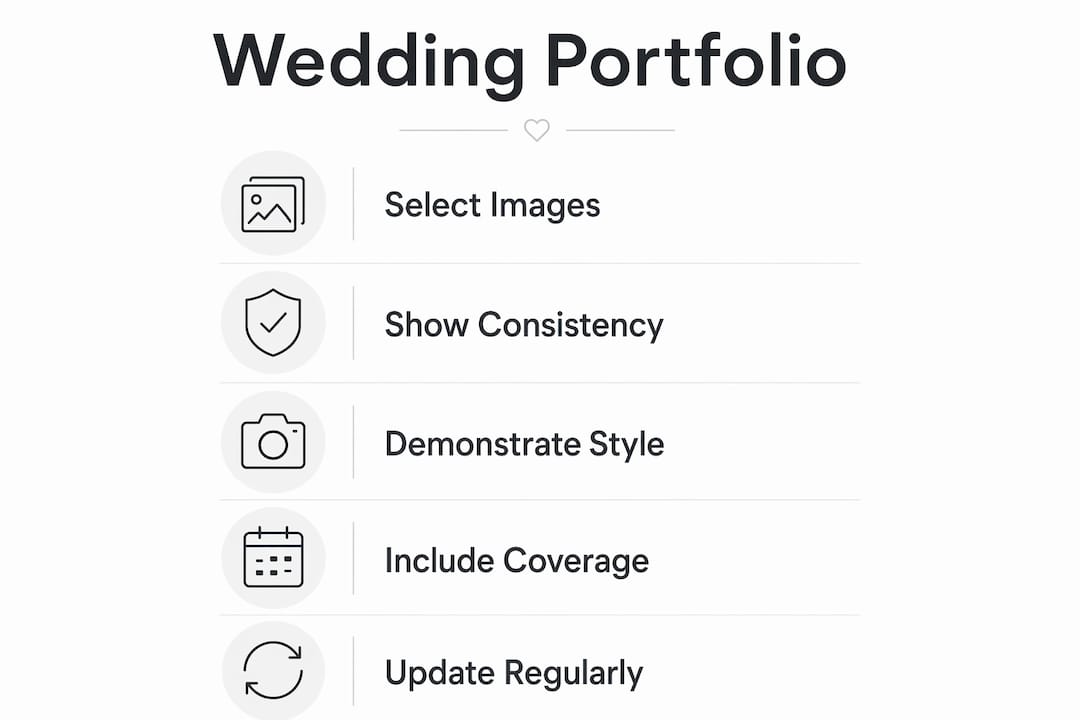
Infographic showing key steps in a wedding portfolio

The reason is straightforward. Showing unrelated styles or mixing wedding work with commercial, portrait, or travel photography forces you to work harder to understand what the photographer actually offers. It dilutes the message and creates doubt rather than confidence. A wedding portfolio should speak clearly to one thing: the photographer’s ability to capture your wedding day.

Here is what strong curation looks like from a viewer’s perspective:

  1. A clear, recognisable style. Whether it is documentary-style photography or a more editorial approach, the style should be identifiable within the first few images.
  2. No obvious filler. Every image should earn its place. If you notice several shots that feel repetitive or unremarkable, the photographer has not edited with enough discipline.
  3. Relevance to your wedding type. A portfolio heavy with outdoor garden weddings may not reassure you if yours is an intimate city venue. Look for images that reflect conditions similar to your own day.
  4. Regular updates. Top photographers continuously update and trim their portfolios to reflect their current direction. A portfolio with images that feel dated suggests the photographer has not kept pace with their own development.

Pro Tip: If a portfolio feels inconsistent or hard to read, trust that instinct. A well-curated portfolio is itself a sign of professionalism and attention to detail.

How to use a wedding portfolio when choosing your photographer

A portfolio is a guide, not a final verdict. Portfolios help couples visualise working with a photographer and the atmosphere they create, but they work best when combined with other sources of information.

Here is how to approach the process practically:

  • Check for coverage variety. Does the portfolio show ceremony, reception, portraits, and details? A portfolio that only features portraits suggests the photographer may not cover the full day with equal care.
  • Notice the mood. Does the portfolio feel like your wedding? If you want relaxed, candid moments and the portfolio is full of heavily directed, formal poses, that is a meaningful mismatch.
  • Read reviews alongside the portfolio. A beautiful portfolio paired with reviews that mention poor communication or missed moments tells a more complete story than either source alone. Your wedding photography checklist can help you structure what to look for.
  • Watch for vague or absent captions. Brief context copy inside a portfolio helps you understand what you are seeing. A portfolio with no context at all can feel impersonal and harder to assess.
  • Book a consultation. Use the portfolio as a conversation starter. Ask the photographer about specific images, how they handled particular lighting conditions, or what their approach was to a certain moment. Their answers reveal as much as the images themselves.

Most couples scan portfolios quickly, so clear navigation and curated images reduce decision fatigue and build trust faster. If a portfolio makes you work too hard to find what you need, that is worth noting.

Key takeaways

A wedding portfolio is the single most reliable indicator of whether a photographer can deliver on your wedding day, provided you know how to read it.

Point Details
Definition of a portfolio A curated selection of images proving real wedding-day capability, not just favourite shots.
Coverage is non-negotiable Look for ceremony, reception, portraits, and detail shots across varied lighting conditions.
Curation beats quantity Thirty focused, consistent images outperform two hundred mixed or unfocused ones.
Use it alongside other tools Combine portfolio review with testimonials, consultations, and package details for a full picture.
Ongoing updates signal quality A regularly refreshed portfolio shows the photographer is actively developing their craft.

My honest read on wedding portfolios

As an experienced wedding photographer, I have seen couples make two common mistakes when reviewing portfolios. The first is being dazzled by one extraordinary image and assuming the rest of the day will match it. The second is overlooking a portfolio that feels quieter or less dramatic but actually shows far more consistent, real-world capability.

A portfolio is a living document. At Svenstudios, Luisa and I are constantly reviewing our own work, removing images that no longer represent where we are, and adding new ones that better reflect the weddings we love shooting. It is a discipline, not a one-time task. When I look at another photographer’s portfolio, I am not just admiring the images. I am asking: can this person handle the chaos of a real wedding day and still come away with something genuine?

The most telling question you can ask a photographer during a consultation is: “Can you show me a full gallery from a recent wedding?” That single request reveals more than any curated portfolio ever could. It shows you the whole truth, not just the highlights.

— Steven

See Svenstudios’ wedding portfolio for yourself

If you are ready to see what a focused, authentic wedding photography portfolio looks like in practice, Svenstudios is a good place to start. Steven and Luisa specialise in authentic wedding photography that captures real moments, genuine emotion, and the full story of your day. Their work spans ceremonies, receptions, portraits, and quiet in-between moments, all with a consistent, natural style. You can browse their full photography portfolio to see curated examples across different weddings and venues. If what you see resonates, reach out to discuss a personalised photography package tailored to your wedding day in Adelaide and beyond.

FAQ

What is a wedding portfolio used for?

A wedding portfolio is used by couples to assess a photographer’s real-day capability, style consistency, and coverage range before booking. It is the primary decision-making tool when comparing photographers.

How many images should a wedding portfolio contain?

There is no fixed number, but quality and consistency matter far more than volume. A focused portfolio of twenty to forty well-chosen images is more persuasive than a large, unfocused collection.

What should I look for in a wedding photography portfolio?

Look for coverage across ceremony, reception, portraits, and details, as well as evidence of adaptability in varied lighting and a consistent editing style throughout.

Is a wedding portfolio the same as a full gallery?

No. A portfolio is a curated selection of the photographer’s strongest work across multiple weddings. A full gallery shows every image delivered from a single event.

How often should a photographer update their portfolio?

Regularly. Ongoing portfolio refinement is a sign of professionalism, reflecting the photographer’s current style and the types of weddings they most want to shoot.

Recommended

  • Stunning Wedding Album Examples To Inspire Your Day
  • Create A Personalised Wedding Photography Experience
  • Find Your Perfect Wedding Photography Style Today
  • Your Ultimate Wedding Photography Checklist For Authentic Moments
June 4, 2026/by Steven Duncan
Interesting

How to relax on your wedding day for photos

Relaxation on your wedding day for photos is achievable through controlled breathing, mental grounding, and a well-prepared support plan. These are not vague suggestions. They are specific, science-backed techniques that reduce the physiological stress response and help you appear natural, present, and genuinely joyful in your images. Knowing how to relax on your wedding day for photos means understanding that authentic pictures come from authentic feelings, not perfect posing. This article covers breathing exercises, emotional anchoring, photographer collaboration, and practical day-of routines to help you feel calm and confident when the camera is pointed your way. Explore our wedding ideas for further wedding planning inspiration.

What are the best breathing techniques for wedding photo anxiety?

Slow breathing significantly reduces anxiety and arousal levels compared to fast or uncontrolled breathing. That finding matters because anxiety is not just a feeling. It is a physiological state, and breathing is one of the fastest ways to change it.

Abdominal breathing inhibits the sympathetic nervous system, which is the part of your body responsible for the fight-or-flight response. When you breathe slowly and deeply into your belly, you increase parasympathetic activity, which is the calming counterpart. The result is a lower heart rate, reduced muscle tension, and a clearer head.

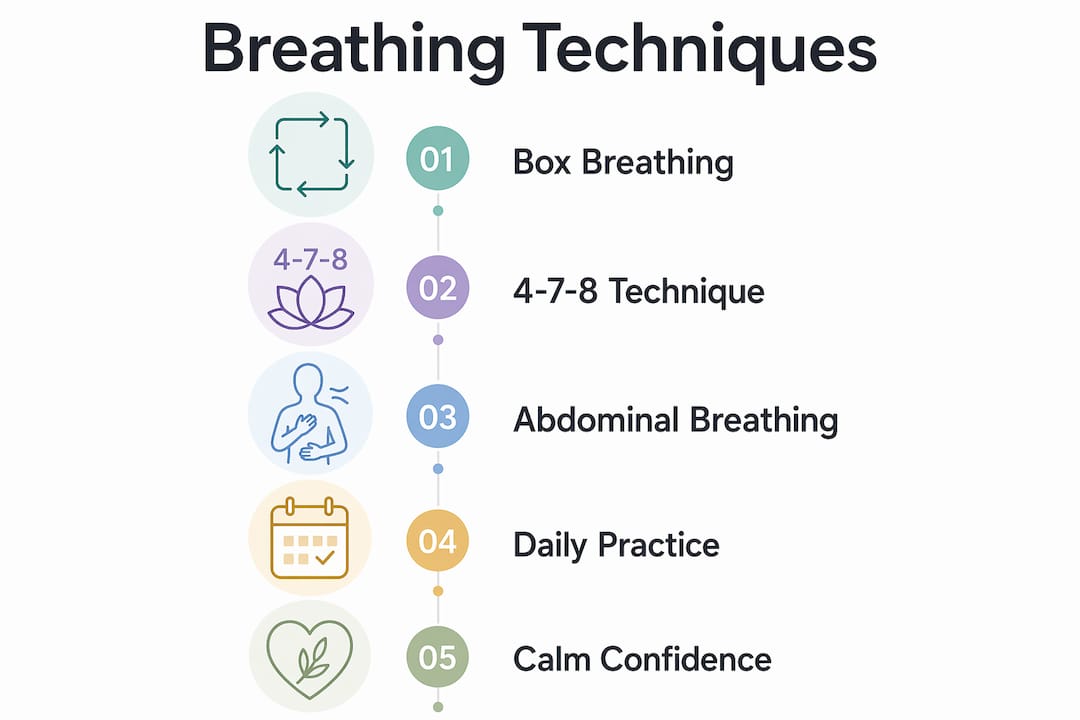
Three techniques are worth knowing before your wedding day.

Infographic illustrating key wedding day breathing techniques

Box breathing (4-4-4-4) is the method used by Navy SEALs and emergency responders to maintain composure under pressure. Inhale for four counts, hold for four, exhale for four, hold for four. Repeat three to five times. It is fast, discreet, and works anywhere, including in a bridal suite or just before portraits begin.

The 4-7-8 technique involves inhaling for four counts, holding for seven, and exhaling slowly for eight. The extended exhale is the key. It forces the nervous system to slow down more aggressively than standard deep breathing.

Abdominal breathing is the simplest of the three. Place one hand on your belly and breathe so that your hand rises on the inhale. Most people breathe shallowly into their chest when anxious, so this technique alone can shift your state noticeably.

Technique Duration Primary effect Ease of use
Box breathing (4-4-4-4) 2 to 3 minutes Lowers heart rate rapidly Very easy
4-7-8 breathing 1 to 2 minutes Deep nervous system calm Moderate
Abdominal breathing Ongoing Reduces chest tension Very easy

Pro Tip: Practise whichever technique you choose every day in the two weeks before your wedding. The more familiar it feels, the more reliably it works when you actually need it.

How does mental preparation help you stay calm for photos?

Mental preparation for wedding photos is the practice of using visualisation, emotional anchoring, and grounding techniques to stay present rather than anxious. Visualisation and emotional anchoring reconnect couples to the meaning behind the day, which reduces performance anxiety significantly.

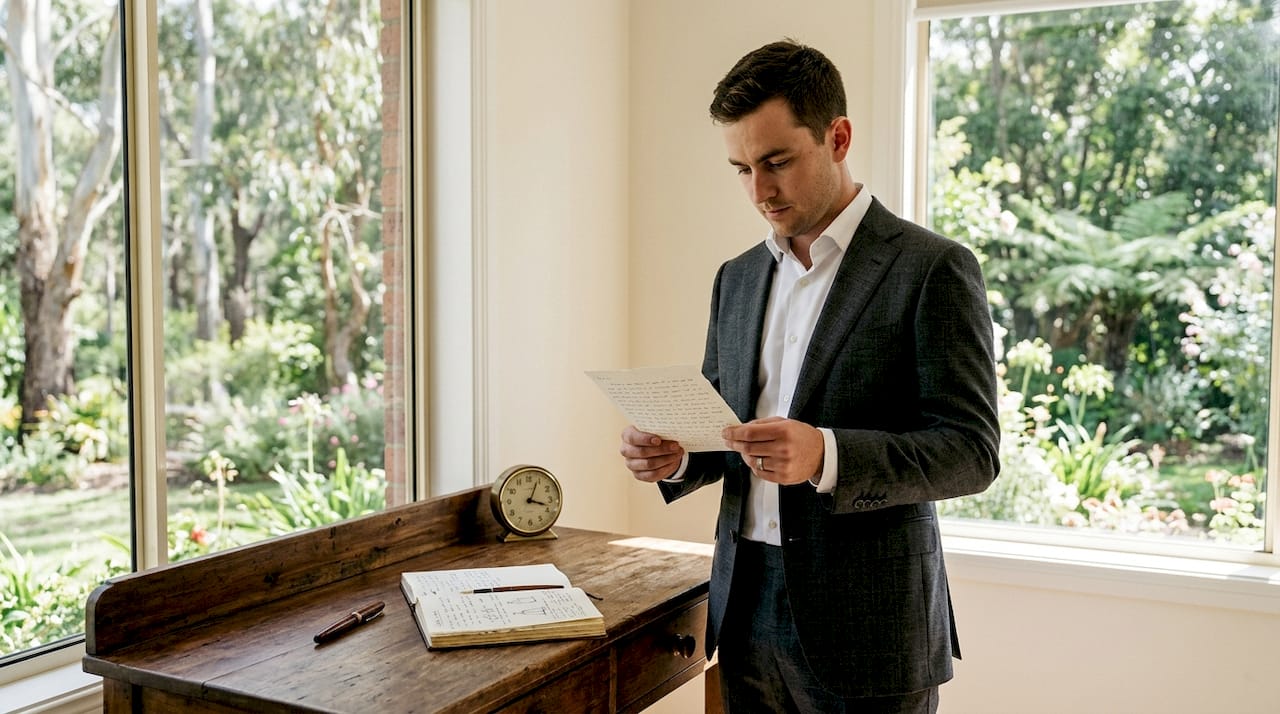
One of the most effective emotional anchors is a letter written to your partner before the ceremony. Reading it in the morning grounds you in the reason you are there. It shifts your focus from how you look in photos to how you feel about the person you are marrying. That shift shows up in every image.

Groom reading emotional letter for calmness

The “5-4-3-2-1” grounding technique is another tool worth having ready. When anxiety spikes, name five things you can see, four you can touch, three you can hear, two you can smell, and one you can taste. This technique pulls your attention into the present moment and interrupts the anxious thought loop that makes people freeze in front of a camera.

Reframing the day also helps. Your wedding is a celebration, not a performance review. No one is grading your smile or your posture. The people there love you. Holding that thought consciously, especially before photo sessions, changes your body language in ways no posing instruction can replicate.

  • Write a short letter to your partner and read it on the morning of the wedding
  • Prepare a small card with your go-to breathing technique and grounding steps
  • Identify one or two emotional anchors, such as your vows or a meaningful object
  • Plan a calm-down strategy in advance so you are not improvising when nerves hit
  • Practise the 5-4-3-2-1 technique at home so it becomes second nature

Pro Tip: Write your calm-down plan on a small card and give it to your maid of honour or best man. Having someone else hold it means you do not have to remember anything on the day itself.

What role does your photographer play in helping you feel relaxed?

Your photographer is not just a technician with a camera. They are the person most responsible for the emotional atmosphere of your photo sessions. Photographers who use candid, movement-based approaches ease couples into natural expressions far more effectively than rigid posing directions.

Choosing a photographer experienced in relaxed, authentic photography is one of the most practical decisions you can make for your wedding day stress relief. Before the wedding, tell your photographer honestly if you feel nervous in front of cameras. A good photographer will adjust their approach, use gentle prompts, and build in movement so you are doing something rather than just standing still.

Your support team matters just as much. Consider assigning one trusted person in your wedding party as your calm-down guide. Their job is simple: check in with you during the day, remind you to breathe, and step in if you need a quiet moment before photos begin.

  • Tell your photographer about your anxiety before the wedding day, not on it
  • Ask about their approach to posing and whether they use movement and candid techniques
  • Request a pre-wedding shoot or engagement session to get comfortable in front of the camera
  • Assign a calm-down person in your wedding party with a clear, simple brief
  • Ask your planner or coordinator to build short breaks into the photo schedule

What practical routines help you stay calm on the wedding morning?

The morning of your wedding sets the emotional tone for the entire day. Avoiding social media on the wedding morning is one of the simplest and most overlooked pieces of advice. Scrolling through Instagram or TikTok feeds comparison and perfectionism, two feelings that are the opposite of relaxed.

Here is a practical morning routine worth considering.

  1. Wake up without your phone for the first thirty minutes. Give yourself time to settle into the day before the outside world enters it.
  2. Eat a proper breakfast. Low blood sugar amplifies anxiety, and hunger makes everything feel harder than it is.
  3. Stay hydrated. Dehydration increases cortisol levels and makes you feel physically tense.
  4. Do five minutes of progressive muscle relaxation, which involves tensing and releasing each muscle group from your feet upward. PMR reduces muscle tension and anxiety and works particularly well the night before or on the morning of the wedding.
  5. Take a short walk in natural light if possible. Even ten minutes outdoors lowers cortisol and improves mood.
  6. If anxiety spikes sharply before photos, run cold water over your wrists. Cold water exposure engages the dive reflex, which lowers heart rate quickly and resets acute anxiety.
  7. Limit caffeine. One coffee is fine. Three is not. Caffeine amplifies the physical symptoms of anxiety, including a racing heart and shaky hands.

Pacing matters too. Build buffer time into your photo schedule so you are never rushing between locations. Feeling rushed is one of the fastest ways to undo all the calm you have built up.

Key takeaways

Relaxing for wedding photos requires preparation before the day, not just willpower on it. Breathing, grounding, and a trusted support team are the three pillars that make natural, joyful photos possible.

Point Details
Breathing is physiological Box breathing and abdominal techniques lower heart rate and calm the nervous system rapidly.
Mental prep reduces performance anxiety Visualisation, emotional anchors, and the 5-4-3-2-1 technique keep you present and grounded.
Your photographer is a partner Choose someone experienced in candid, movement-based work and communicate your needs before the day.
Morning routines matter Avoid social media, eat well, stay hydrated, and use PMR or cold water exposure if anxiety spikes.
Practise before the day Breathing techniques and grounding methods work best when they are already familiar to you.

What I have learned from watching couples relax in front of the camera

As a wedding photographer, I have watched hundreds of couples walk into their photo sessions with tight shoulders and nervous smiles, and then, within ten minutes, completely forget the camera is there. That shift never comes from posing instructions. It comes from connection.

The couples who look most natural in their photos are almost always the ones who have done a little preparation beforehand. Not obsessive preparation. Just a few minutes with a breathing technique, a letter read that morning, or a quiet word with their support person before portraits begin. Those small acts of preparation create a foundation of calm that no amount of in-the-moment coaching can fully replace.

What I find genuinely interesting is how rarely couples think about the emotional side of wedding photography until the day itself. The dress, the flowers, the venue, all of that gets months of attention. But the internal experience of being photographed? That often gets none. And yet it is the single biggest factor in whether your photos feel alive or stiff.

My honest advice: practise your breathing technique until it feels boring. Talk to your photographer before the wedding, not just on it. And on the day, remind yourself that the goal is not to look relaxed. It is to actually be relaxed. The camera will do the rest.

— Steven

How Svenstudios can help you feel at ease on your wedding day

At Svenstudios, Steven and Luisa have built their entire approach around helping couples feel genuinely comfortable in front of the camera. Their style prioritises candid moments, natural movement, and authentic connection over stiff, directed posing. Every session is designed with your comfort in mind, from the initial consultation through to the final portrait. If you are looking for authentic wedding photography that captures who you actually are on the day, rather than a polished performance of it, Svenstudios offers a personalised photography experience tailored to your personality and pace. Reach out to discuss how they can make your photo sessions feel as natural and relaxed as the rest of your day.

FAQ

What is the fastest way to calm nerves before wedding photos?

Box breathing (4-4-4-4) is the fastest technique available. Inhale for four counts, hold for four, exhale for four, hold for four, and repeat three times. Running cold water over your wrists also lowers heart rate quickly by engaging the dive reflex.

How can I look natural in wedding photos if I hate being photographed?

Choose a photographer who uses movement and candid techniques rather than static posing. Communicating your discomfort before the day allows your photographer to adjust their approach and build in activities that distract you from the camera.

Should I do a pre-wedding shoot to prepare?

Yes. An engagement or pre-wedding shoot is one of the most practical ways to get comfortable with your photographer and with being photographed. It removes the unfamiliarity that contributes to stiffness on the wedding day itself.

Does what I eat on the morning of my wedding affect my anxiety?

It does. Low blood sugar amplifies anxiety symptoms, and dehydration raises cortisol levels. Eating a proper breakfast and drinking enough water are straightforward ways to reduce the physical side of wedding day nerves before photos begin.

How do I help my partner stay calm during photos too?

Assign a calm-down person in your wedding party who checks in with both of you. A clear support plan prepared in advance, including a trusted person and a simple breathing reminder, prevents anxiety from escalating for either of you during the day.

Recommended

  • Relaxed Wedding Photography For Authentic, Joyful Memories
  • Planning Natural Wedding Portraits: Candid Photography Tips
  • Your Engagement Photo Session Workflow For Authentic Memories
  • Create A Personalised Wedding Photography Experience
June 2, 2026/by Steven Duncan
Interesting

Why choose a husband and wife photography team

A husband and wife photography team is defined as two professional photographers who are married partners, working together to cover your wedding day from every angle. SvenStudios’ Adelaide wedding photographers page provides a broader wedding photography overview. More engaged couples are choosing this model over solo photographers or unrelated second shooters, and the reasons go well beyond convenience. The benefits of couple photographers include intuitive communication, complementary creative skills, and a personal empathy that comes from lived experience of marriage itself. Understanding why this duo format works so well, and where it can be tested, helps you make a genuinely informed choice.

Why choose a husband and wife photography team for your wedding?

The single greatest advantage of this arrangement is seamless coordination during the event itself. Two people who share a life together develop a shorthand that no professional contract can replicate. A glance across a crowded reception room, a subtle nod during the ceremony, a quiet gesture near the bridal suite door. These micro-signals keep both photographers positioned correctly without a word being spoken aloud.

This matters enormously on a wedding day, where noise, emotion, and movement make verbal coordination disruptive. Wordless communication between partners, like small gestures and glances, allows them to stay emotionally attuned to the room without interrupting the atmosphere you have worked so hard to create. The result is fewer missed moments and better overall coverage.

  • Ask any photography duo you are considering how they divide responsibilities during the ceremony and reception.
  • Find out whether they use hand signals, earpieces, or simply rely on experience to stay coordinated.
  • Ask for a sample timeline showing who covers what at each stage of the day.

Pro Tip: During your initial meeting, watch how the couple communicates with each other. Natural, easy back-and-forth is a reliable indicator of how they will perform under pressure on your wedding day.

What creative advantages do couple photographers offer?

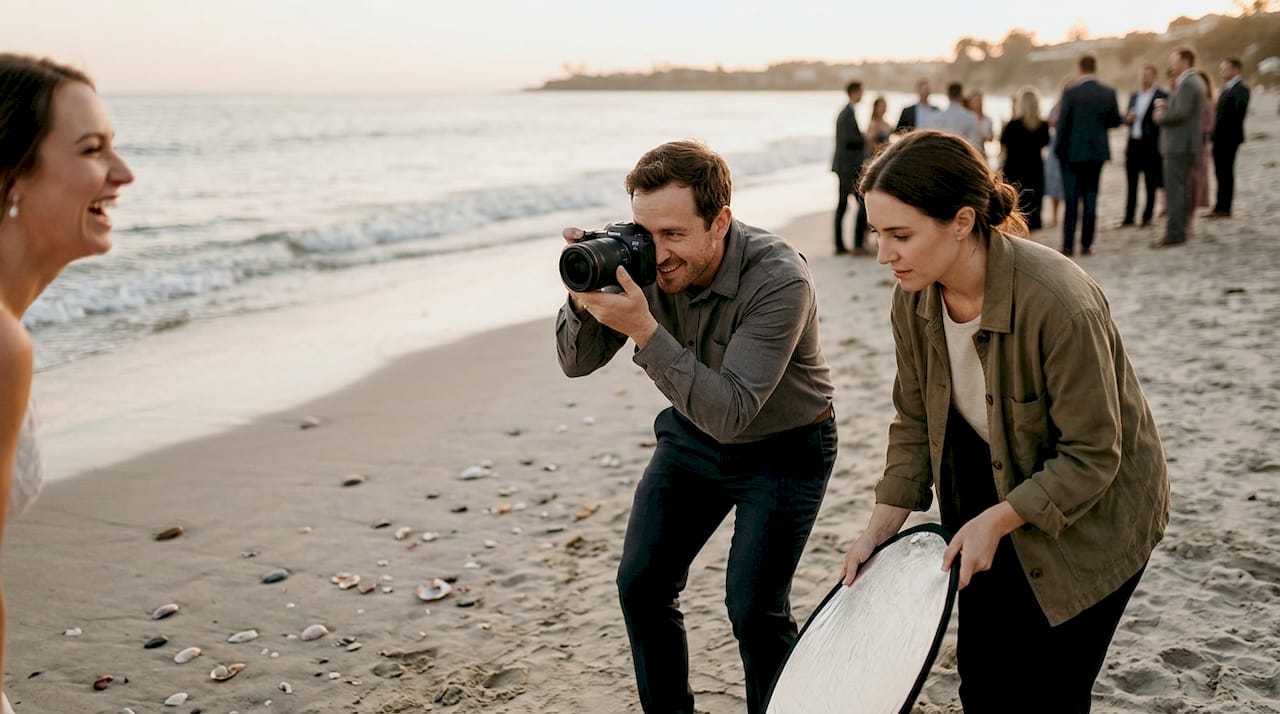
The husband and wife photography team model produces a creative output that is genuinely difficult to replicate with a solo photographer or a randomly paired second shooter. Each partner often specialises in a different photographic style. One may focus on candid, documentary-style captures while the other handles posed portraits and formal group shots. Together, they cover the full emotional spectrum of your day.

Couple photographers capturing candid wedding moments

Their shared aesthetic and values produce a cohesive visual narrative rather than two separate collections stitched together. When you hire an unrelated second photographer, there is a real risk of clashing editing styles, double directing of subjects, or inconsistent colour grading across your gallery. A couple who has built a business together avoids this almost entirely. You can explore different photography styles to understand what approach suits your vision before you commit.

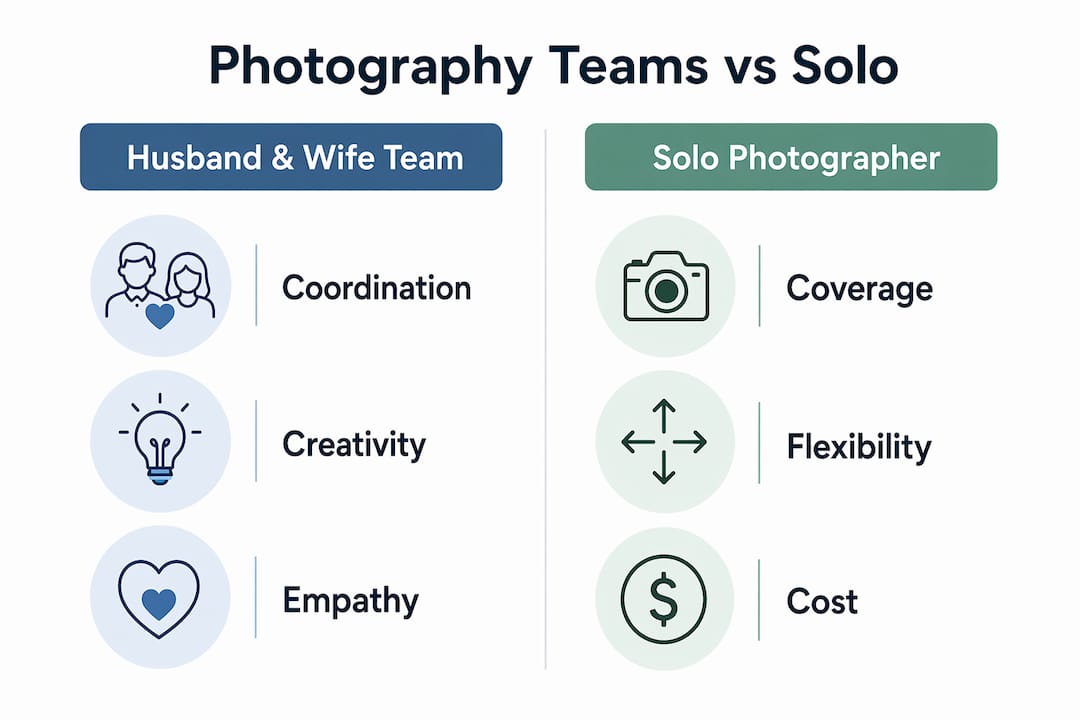
Feature Husband and wife team Solo photographer Unrelated second shooter
Communication Intuitive, near-wordless Self-directed Requires active coordination
Creative consistency High, shared vision High, single perspective Variable, risk of style clash
Coverage breadth Wide, two simultaneous angles Limited to one position Wide, but potentially inconsistent
Emotional attunement Deep, informed by shared life Dependent on individual skill Variable
Cohesive final gallery Strong Strong Moderate

Infographic comparing husband-wife teams and solo photographers

What empathy do married photographer duos bring to your day?

Married photographers bring something to your wedding that is genuinely personal. They have lived through wedding stress themselves. They know what it feels like to stand at the altar, to manage family dynamics, to feel the weight of the day pressing on you from every direction. That lived experience shapes how they approach their work with you.

This empathy translates into a more comfortable client relationship from the very first meeting. You are not dealing with vendors who are simply executing a brief. You are working with people who are genuinely invested in your story. Their shared sensitivity to moments often unnoticed by others, such as a grandmother wiping away a tear, a flower girl losing her nerve, a quiet look between the couple during speeches, produces imagery that feels true rather than staged.

The practical benefits of this emotional attunement include:

  • A more relaxed atmosphere around the couple and their families, because the photographers feel familiar rather than intrusive.
  • Greater willingness to capture authentic love stories rather than defaulting to formulaic poses.
  • A natural ability to anticipate emotional peaks in the programme, positioning themselves before the moment rather than reacting after it.
  • Personalised guidance during portraits, drawing on their own experience as a couple to help you feel at ease in front of the camera.

What are the challenges of hiring a husband and wife photography team?

It would be dishonest to present this arrangement as entirely without complication. Working as a married photography team carries genuine challenges, including the difficulty of separating work stress from personal relationship dynamics. Small disagreements about workflow or creative direction can escalate when the people involved are also partners at home.

The best teams address this proactively. Clear role definitions and coordinated leadership on the day are what separate a polished duo from a chaotic one. You want a team where each person knows their lane, and where conflict management is a practised skill rather than an afterthought. Asking direct questions during your consultation will tell you a great deal about how well they function under pressure.

Pro Tip: Ask the team directly: “How do you handle disagreements on the day?” A confident, specific answer, such as a pre-agreed system for decision-making or a clear lead photographer role, signals a mature working partnership.

Couples should also verify the team has a clear on-day plan that delineates who shoots what. This prevents overlap, reduces crowding, and keeps the day flowing smoothly. A well-organised duo is a genuine asset. A disorganised one, regardless of their personal connection, adds stress rather than removing it.

Key takeaways

A husband and wife photography team delivers the best results when their communication, creative alignment, and conflict management are all working together.

Point Details
Intuitive coordination Married teams communicate through shared cues, reducing missed moments during the wedding day.
Complementary creative skills Each partner often specialises differently, producing wider coverage and a cohesive final gallery.
Empathy from lived experience Having been through their own wedding, couple photographers bring genuine emotional attunement to yours.
Ask the right questions Assess conflict management, role clarity, and on-day planning before you commit to any duo.
Cohesive storytelling Shared aesthetic values produce a consistent gallery that unrelated second shooters often cannot match.

What I have learned from working as a couple in this industry

As someone who photographs weddings alongside my partner Luisa, I can tell you that the dynamic is genuinely different from any other working arrangement. The shorthand we have built over years of shared life and shared work means we rarely need to speak during a ceremony. We simply know where the other one is and what they are covering.

What I would caution couples against is romanticising this too heavily. The practical questions matter just as much as the emotional ones. Ask about workflow. Ask about editing consistency. Ask what happens when one of us is unwell on the day. A couple team that has thought through these scenarios will give you clear, calm answers. One that hasn’t will give you vague reassurances.

The couples who get the most from working with us are the ones who treat us as part of their wedding community rather than a service provider they have booked and forgotten. That relationship, built through honest conversation before the day, is what produces the imagery that genuinely moves people years later.

— Steven

How Svenstudios captures your wedding story as a couple team

Steven and Luisa at Svenstudios are a husband and wife photography and videography team based in Adelaide, bringing exactly the communication, empathy, and creative alignment described throughout this article to every wedding they photograph. Every package is built around personalised wedding photography that reflects your personalities rather than a template. From candid ceremony captures to relaxed couple portraits, the approach is always genuine, never forced. If you are ready to see what this kind of partnership looks like in practice, explore the authentic wedding photography work Svenstudios has produced for couples across South Australia.

FAQ

What is a husband and wife photography team?

A husband and wife photography team is two professional photographers who are married partners, working together to provide full wedding coverage. They combine complementary skills and intuitive communication to capture your day from multiple angles simultaneously.

Why hire a wedding photography duo over a solo photographer?

A duo provides wider coverage, two simultaneous perspectives, and a cohesive gallery that a single photographer physically cannot deliver alone. A married duo adds the additional benefit of intuitive coordination and shared creative vision.

How do I know if a husband and wife team communicates well?

Watch how they interact during your initial consultation and ask directly how they coordinate on the wedding day. Teams with clear role definitions and practised conflict management will give you specific, confident answers rather than general reassurances.

Are there any downsides to hiring a couple photography team?

The main consideration is whether the team has established clear boundaries between their personal and professional relationship. Ask about their workflow, role clarity, and how they handle disagreements to assess whether their partnership holds up under the pressure of a wedding day.

Do husband and wife photography teams cost more than solo photographers?

Pricing varies widely and depends on experience, location, and package inclusions rather than the team structure itself. In many cases, a married duo offers comparable or better value than hiring a solo photographer plus a separate second shooter.

Recommended

  • Create A Personalised Wedding Photography Experience
  • Authentic Wedding Photography For Your True Love Story
  • Adelaide Engagement Photographer | SvenStudios
  • Find Your Perfect Wedding Photography Style Today
June 1, 2026/by Steven Duncan
Interesting

Your proposal photoshoot guide: plan it perfectly

Few moments in life carry as much weight as a marriage proposal. You want photos that genuinely capture the shock, the tears, the laughter — not stiff portraits that feel staged five minutes after the fact. Yet this is exactly where most couples struggle. A proposal photoshoot guide sounds simple in theory, but the coordination involved — choosing a location, briefing a photographer without spoiling the surprise, timing the light — is trickier than it looks. This guide walks you through every step, from foundational planning through execution, so nothing is left to chance on the day.

Key takeaways

Point Details
Plan well ahead Confirm location, photographer, and signals at least four weeks before the proposal date.
Timing shapes everything Golden hour lighting is the single biggest factor in how flattering your photos will look.
Coordination is critical Establish a clear signal system between proposer and photographer before the day.
Keep shooting afterwards The 30 minutes after the proposal often hold more emotional value than the moment itself.
Avoid common mistakes Late arrivals, unclear signals, and stopping the shoot early are the most frequent issues.

The proposal photoshoot guide: getting the foundations right

Before you think about camera angles or Instagram aesthetics, three decisions shape the entire shoot. Location, timing, and photographer. Get these right and almost everything else falls into place.

Choosing your location

Pick somewhere that means something to you both, but also works practically for photography. Busy tourist spots look beautiful in theory and chaotic in photos. Quieter alternatives — a botanic garden at dawn, a stretch of coastline, a rooftop with city views — offer privacy and far more flexibility for the photographer to move around without being spotted.

Timing the light

Avoid harsh midday sun, which casts unflattering shadows across faces. Golden hour, the 30 to 60 minutes before sunset, wraps everything in warm, soft light that photographs beautifully. If a daytime proposal is unavoidable, seek open shade, like a tree canopy or the shadow of a building.

Wardrobe that works on camera

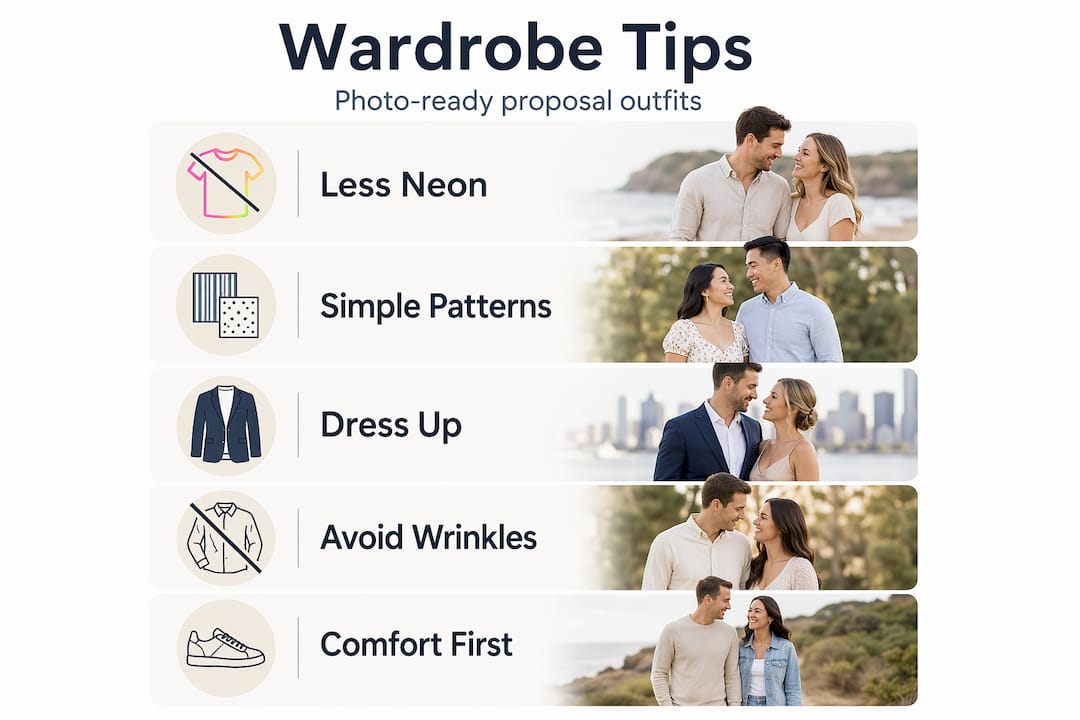
Dress roughly 20% more formally than your normal everyday wear. Avoid neon colours and loud patterns, which pull attention away from your faces. Soft neutrals, earthy tones, and complementary colours between partners photograph consistently well.

Infographic showing wardrobe tips for proposal photos

Finding the right photographer

Look for someone who has shot proposals specifically, not just weddings or portraits. Review their work for unposed, candid moments. A photographer experienced in Adelaide engagement photography or your specific city will already know the best light conditions and vantage points for local locations.

Pro Tip: Ask your photographer to show you three to five proposal shoots from their portfolio before booking. If every image looks heavily directed, keep looking.

Logistics: arrival, signals, and rehearsals

The proposal itself lasts seconds. The preparation behind it takes considerably longer, and that preparation is what separates polished photos from blurry disappointments.

  1. Photographer arrival time. Your photographer should arrive 60 to 90 minutes early to scout the location, identify hiding spots, test angles, and check lighting conditions. Rushing this setup is one of the most common reasons proposal photos miss the mark.

  2. Establish your signal. A subtle signal between proposer and photographer is non-negotiable. Common signals include touching your watch, placing your hand on your partner’s back, or a specific phrase in conversation. Keep it natural enough that your partner will not notice anything unusual.

  3. Walk the approach route. Rehearse, at least mentally, the exact path you will take to reach the proposal spot. Your photographer needs to know which direction you are approaching from so they can position themselves correctly and avoid being seen.

  4. Build in a backup plan. Rain, crowds, or dramatic changes in light can derail even the most carefully planned shoot. Discuss alternatives ahead of time with your photographer, whether that is a nearby indoor venue or a revised timing if weather changes.

Pro Tip: Send your photographer a photo of your partner’s outfit the day before. It helps them adjust camera settings for the specific colours and tones they will be shooting against.

Capturing the moment: angles, settings, and authenticity

This is where a thoughtful proposal photoshoot guide gets genuinely technical, but the principles are straightforward once you understand what you are trying to achieve.

Camera settings for fleeting reactions

The key reaction when someone is proposed to lasts less than one second. Your photographer should be shooting at a minimum shutter speed of 1/250s, ideally 1/500s, and using burst mode at around 10 frames per second. These settings guarantee at least one frame captures the peak expression perfectly.

Positioning and lens choice

Positioning 10 to 15 metres away with a telephoto lens in the 70-200mm range keeps the photographer invisible while still capturing intimate detail. This distance also compresses the background beautifully, giving images a professional look that wide-angle shots simply cannot achieve.

The four shots that tell the whole story

Four key angles cover the proposal comprehensively:

  • Wide establishing shot — sets the scene and location context
  • 45-degree side profile — captures both the person kneeling and the partner’s reaction simultaneously
  • Ring detail close-up — the moment the ring appears is always worth a dedicated frame
  • Silhouette or back shot after acceptance — often the most emotionally powerful image of the whole set
Shot type Purpose Ideal lens range
Wide establishing Context and location 24-50mm
Side profile Dual reaction capture 70-135mm
Ring close-up Detail and symbolism 85-200mm (macro if available)
Silhouette after yes Emotion and atmosphere 70-200mm

Minimal direction during the proposal is what separates genuine images from rehearsed-looking ones. A good photographer reads the scene and adapts. They do not interrupt.

After the yes: post-proposal portraits

Many couples make the mistake of stopping the shoot the moment the ring is on the finger. That is actually when the best images begin.

The 30 minutes immediately after the proposal are frequently more emotionally rich than the proposal itself. You are no longer tense with anticipation. Your partner has processed the surprise. The laughter, the embracing, the happy disbelief — this is raw storytelling gold.

Couple sharing candid post-proposal moment

Transition naturally into a brief engagement-style portrait session at the same location. Stay at the same spot initially to maintain mood and visual continuity, then move to one or two nearby areas for variety. You do not need elaborate setups. Walking together, sitting close, looking at the ring, sharing a quiet moment — these are the images couples frame on their walls a decade later.

The balance between guided poses and candid shots matters here. Your photographer might suggest a specific location or ask you to walk in a certain direction, but the expressions within those moments should remain entirely your own.

Pro Tip: Discuss wardrobe for a post-proposal portrait session before the day. If you want to change into something more formal, leave that outfit in the car. Thirty minutes is enough time for a quick change that makes the after-shoot feel distinct from the proposal itself.

Common mistakes to avoid

A strong proposal shoot checklist helps, but knowing what can go wrong is equally valuable. Watch for these:

  • Photographer arriving late or unprepared. There is no recovery if the setup is missed.
  • Unclear or untested signals. Practise the signal in person before the day. Do not assume it will work.
  • Crowded or visually noisy locations. Strangers walking through the background break the intimacy completely.
  • Clothing that distracts. Neon shades, busy prints, or very dark tones in flat light all create problems.
  • Ending the shoot too early. Stay present and keep shooting for at least 20 to 30 minutes after the proposal.
  • No contingency for weather. Adelaide weather in particular can shift rapidly. Have a plan B location ready.

My honest take on what actually matters

I have photographed proposals where every element was meticulously planned, and I have photographed others where something went slightly sideways. What I have noticed is this: the couples who get the most meaningful images are not necessarily the ones with the best-planned shoots. They are the ones who trusted the process and stayed present in the moment.

Authentic emotion beats posed images every single time. I have seen technically perfect proposal shots that feel hollow because the subjects were aware they were being photographed. And I have seen slightly underexposed frames shot in imperfect light that are so full of genuine feeling that they make you tear up.

The best thing you can do is choose a photographer whose instinct is to observe rather than direct, brief them thoroughly, and then let go. Your only job on the day is to be completely present. The best proposal photography blends preparation with the ability to read and respond to a scene as it unfolds.

— Steven

Capture it properly with Svenstudios

At Svenstudios, Steven and Luisa have spent years photographing authentic, unposed moments across Adelaide and beyond. Proposal shoots are a speciality because they demand exactly what the team does naturally: staying invisible, reading emotion quickly, and knowing when to hold back and when to move in for a closer frame. You can explore the couples photography portfolio to see how genuine proposal and engagement moments look when captured with care. If you are planning a proposal and want a photographer who treats your moment with the attention it deserves, reach out to discuss a personalised photography experience tailored entirely around your story.

FAQ

When should the photographer arrive for a proposal shoot?

Your photographer should arrive 60 to 90 minutes before the scheduled proposal to scout the location, find a hiding position, and test their angles in the actual light conditions.

What is the best time of day for proposal photos?

Golden hour, roughly 30 to 60 minutes before sunset, provides the softest, most flattering natural light. Midday sun creates harsh shadows and is best avoided when possible.

How do I pose for proposal photos without it looking staged?

You do not need to pose at all during the proposal itself. Authentic reactions are always more powerful than directed ones. Save any guided posing for the post-proposal portrait session that follows.

How long should a proposal photoshoot take?

Plan for the proposal moment itself plus at least 20 to 30 minutes of portraits afterwards. That post-proposal window captures the raw emotion and joy that makes the full visual story complete.

What signal system works best between proposer and photographer?

Simple physical cues work reliably. A hand on your partner’s back, touching your watch, or a specific phrase in conversation are all subtle enough to go unnoticed while being clear enough for your photographer to act on immediately.

Recommended

  • Create A Personalised Wedding Photography Experience
  • The True Role Of A Photographer In Adelaide Proposals
  • Planning Natural Wedding Portraits: Candid Photography Tips
  • Your Engagement Photo Session Workflow For Authentic Memories
May 28, 2026/by Steven Duncan
Page 5 of 38«‹34567›»

Blog

All
News
Wedding Ideas

Latest

  • Caitlin and Adam embracing in a grassy field at sunset during their Capella farm wedding
    Capella Wedding Photography – Caitlin & Adam’s Farm Wedding
  • Kuitpo Hall Wedding - Courtney & Jarrod
    Kuitpo Hall Wedding – Courtney & Jarrod
  • Hands arranging wedding budget sheets and guest list
    Wedding planning tips 2026: your complete Aussie guide
  • Wedding slideshow display setup in reception hall
    What is a same day wedding slideshow?
  • Wedding at Al-Ru Farm – Teresa & Thomas
    Wedding at Al-Ru Farm – Teresa & Thomas

ADELAIDE PHOTOGRAPHY SERVICES

  • Wedding Photography
  • Wedding Videography
  • Newborn Photography
  • Family Photography
  • Engagement Photography

ONLINE SHOP

    • Bridal Bouquet Charms
    • Hand Made Wedding Items
    • Super 8 Film to Digital
    • VHS to Digital
    • Photobooth Hire
    • Live Stream Service
    • Audio Guest Book Hire
    • Happlee QR
    • SelfBooth


QUICK LINKS

  • Home
  • About Svenstudios
  • Testimonials
  • Portfolio
  • Contact
  • Sitemap

FREE SERVICES

  • SeatScan – QR Seating Chart
  • SICC – IG Carousel Composer
  • Slideshow Reel Creator

  • ABIA

  • Best in Adelaide

AROUND AUSTRALIA & NZ

  • Adelaide
  • Darwin
  • Hobart
  • Canberra
  • Perth
  • Queenstown, NZ
  • International

PHOTO & VIDEO PACKAGES

  • Adelaide Packages
  • Australia-Wide Packages
  • New Zealand-Wide Packages

RESOURCES

  • Adelaide Wedding Venues
  • Darwin Wedding Venues

GET IN TOUCH


  • 40 Horseshoe Dr, Aberfoyle Park SA 5159


  • 0401 403 080


  • sven@svenstudios.com

OFFICE HOURS:

  • Monday-Friday 09:00 – 17:00
  • ABN – 81371854076

CONNECT WITH US


Facebook


Instagram


Pinterest


YouTube


TikTok

© Copyright - SvenStudios - Enfold WordPress Theme by Kriesi
  • Link to Facebook
  • Link to Instagram
  • Link to Youtube
  • Link to Pinterest
  • Link to TikTok
  • Link to Mail
Scroll to top Scroll to top Scroll to top