If you’re looking for a fun way to encourage guests to mingle, laugh and capture incredible memories, a photo scavenger hunt QR code is one of the most engaging additions you can introduce to your event. While printable scavenger hunts have been popular for years, today’s guests expect something more interactive, immediate and rewarding.
That is exactly where Happlee QR changes everything. Instead of handing guests a printed sheet that is forgotten on a table, Happlee transforms your event QR code into an interactive experience complete with live photo uploads, challenges, points, leaderboards and instant gratification.
What Is a Photo Scavenger Hunt QR Code?
A QR code photo scavenger hunt allows guests to scan a single QR code using their phone and receive a list of fun photography challenges. Rather than ticking boxes on paper, guests upload real photos directly from their phones as evidence that they completed each challenge.
The result is a collaborative gallery full of authentic moments that would never be captured by the photographer alone.
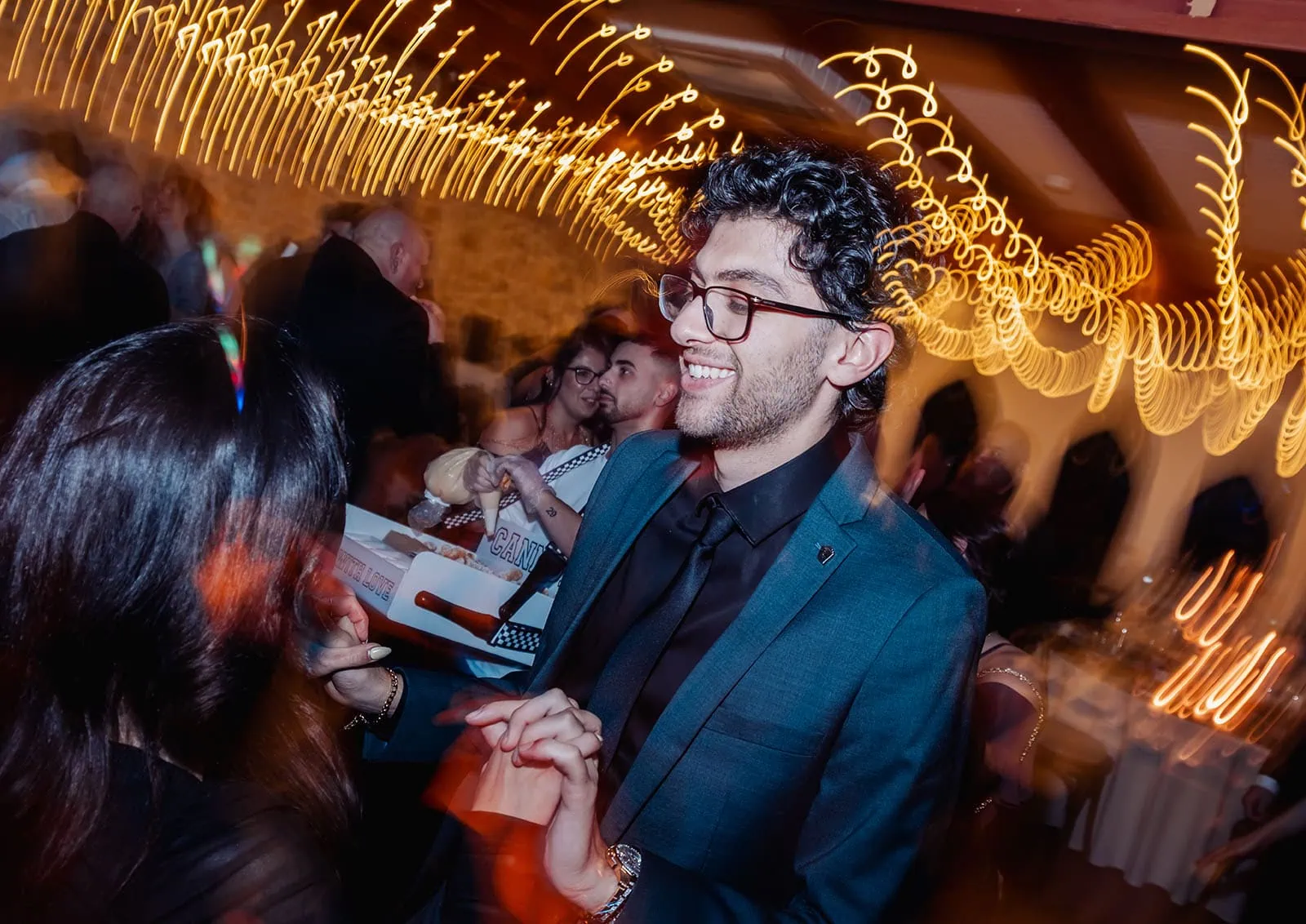
Joyful wedding guests dance at a lively reception with golden light trails.
The Problem With Printable Scavenger Hunts
Traditional printable scavenger hunts certainly have their place, but they also have significant drawbacks.
Guests lose the sheet.
No instant feedback.
No automatic scoring.
No shared gallery.
No excitement once completed.
Difficult to judge winners fairly.
Paper simply cannot compete with a connected experience.
Why Happlee QR Is Different
Happlee QR begins with a single QR code but evolves into the central hub for your entire celebration. Guests already visit it to find seating charts, RSVP information or event details. Adding a live scavenger hunt gives them another reason to return throughout the event.
Every completed challenge can award points instantly. Guests see their progress, upload their photos immediately and compete against friends in real time.
Woman unlocks an augmented reality wedding reward on her smartphone during a glowing reception celebration.
Leaderboards Create Friendly Competition
One of Happlee QR’s most exciting features is the live engagement leaderboard. Every completed challenge earns points, encouraging guests to participate from the beginning of the event until the very end.
Unlike printed games where nobody knows who’s winning, guests can watch the rankings update live. Friendly competition naturally encourages more photo uploads and greater participation.
More Than Just Photos
Because Happlee QR is a complete engagement platform, the scavenger hunt can work alongside photo and video collection, audio guestbooks, digital guestbooks, polls, trivia, wishing wells and RSVPs.
Everything happens from one familiar QR code—no apps to download and no accounts required.
Ideas for Wedding Photo Challenges
Someone crying during the ceremony
A group selfie with another table
The funniest dance move
A photo with the bride or groom
Someone wearing blue
The happiest grandparent
The best dessert photo
A creative rings photograph
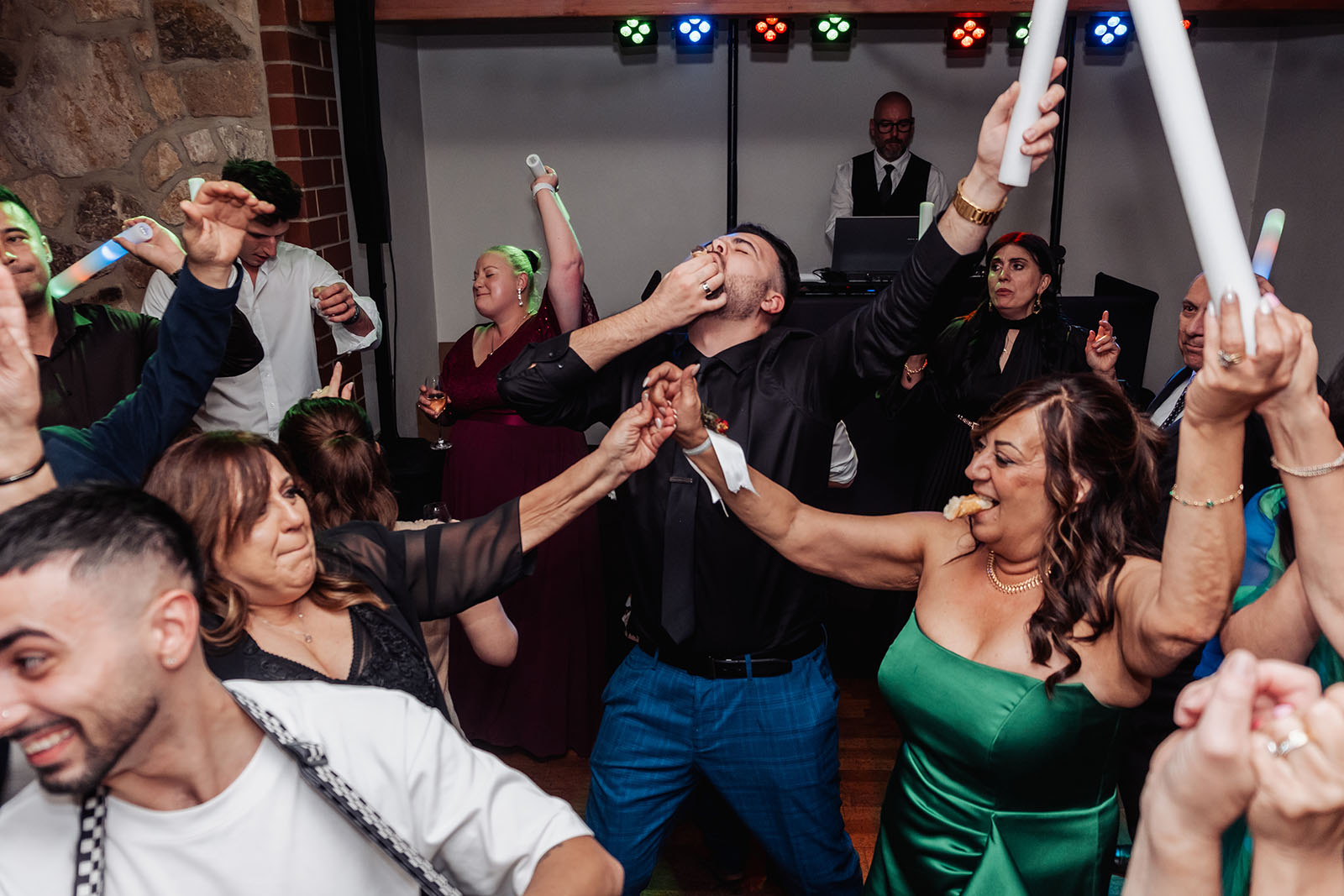
Guests celebrate on a lively wedding reception dance floor with a DJ, colorful lights, and glowing foam sticks.
Corporate Events Work Brilliantly Too
The same technology works for conferences, team-building events, product launches, fundraisers and Christmas parties. Businesses can customise challenges to encourage networking while collecting valuable user-generated content.
Better Memories for Everyone
Professional photographers naturally focus on the key moments. Guests capture everything else—the laughter between speeches, conversations during cocktail hour and spontaneous moments that make every event unique.
Instead of dozens of photos remaining trapped on personal phones, Happlee QR collects them into one shared gallery instantly.
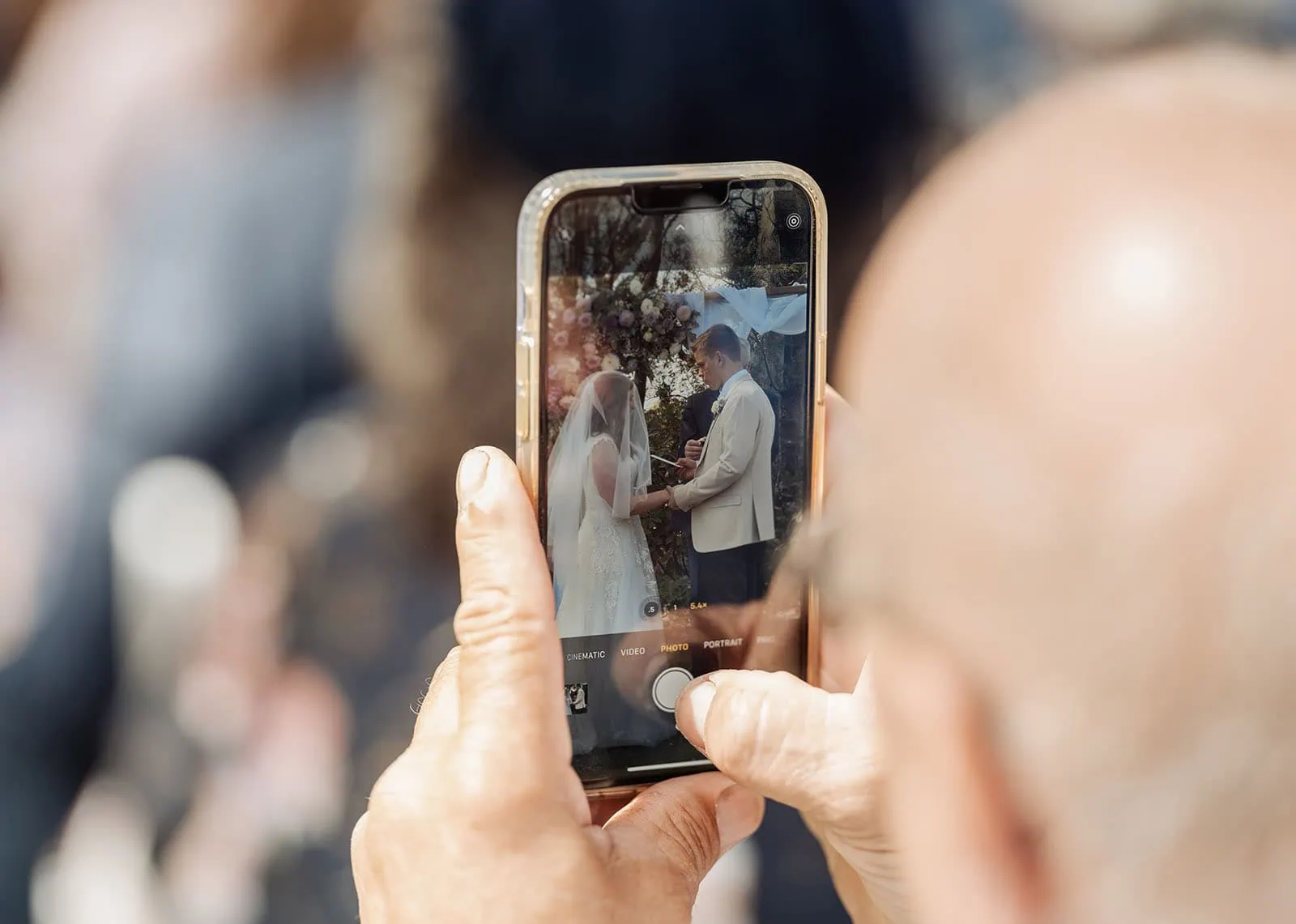
A smartphone captures a timeless moment as a bride and groom exchange vows amidst a romantic floral backdrop at an outdoor wedding.
Completely Mobile Friendly
Modern guests expect everything to work from their phone. Happlee QR is designed mobile-first, making participation effortless. Scan once and every feature is available from the same interface.
Free Features and Flexible Upgrades
Unlike many event platforms, Happlee QR includes free QR seating charts and RSVP collection. Optional premium features—including interactive photo scavenger hunts, leaderboards, photo and video collection and audio guestbooks—can be enabled whenever organisers are ready.
If your goal is simply to hand guests another piece of paper, printable scavenger hunts still work. But if you want genuine engagement, live competition, collaborative memories and an experience guests will continue talking about long after the event finishes, a photo scavenger hunt QR code powered by Happlee QR is in another league.
Explore everything Happlee QR has to offer by visiting Happlee QR.
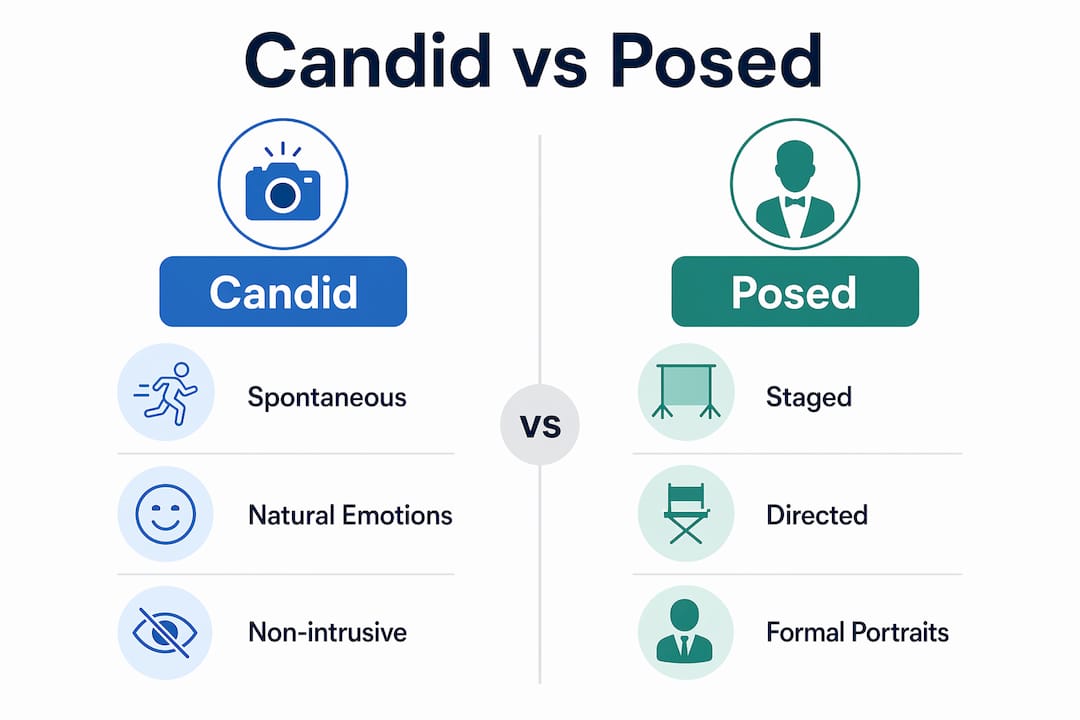
The difference between candid and posed wedding photos is straightforward. Candid photography captures genuine, unplanned moments as they unfold naturally. Posed photography involves deliberate direction from the photographer to create polished, structured compositions. Most modern weddings use a hybrid approach, blending roughly 80–90% candid images with 10–20% posed portraits. Understanding both styles helps you make confident decisions about your wedding photography and what your finished album will actually feel like to look through.
What is the difference between candid and posed wedding photos?
Candid photography is non-staged and observational; posed photography relies on professional direction to arrange subjects deliberately. That single distinction shapes everything else about how each style is shot, how it feels to be photographed, and what the final images communicate.
Candid images capture the laugh your mum lets out when you walk down the aisle. Posed images capture you and your partner looking your absolute best against a golden-hour backdrop. Neither is superior. They serve different emotional and practical purposes, and the best wedding albums contain both.
The industry term for candid-dominant wedding photography is documentary style, sometimes called photojournalistic wedding photography. You will hear these terms used interchangeably. Knowing the standard vocabulary helps when you are reading photographer websites or comparing packages.
What is candid wedding photography and how is it captured?
Candid wedding photography is a documentary-style, non-intrusive approach that captures genuine moments as they happen, without staging or direction. The photographer acts as an observer, staying close enough to catch the action but far enough away to avoid influencing it.
The emotional payoff is significant. Candid photography lets couples relive the emotion and movement of their day in a way that heavily posed imagery simply cannot replicate. That shift reflects a broader preference for authentic storytelling over photo performance. This approach can also suit destination wedding photography.
Key qualities of candid wedding photography include:
Observation over direction. The photographer anticipates moments rather than creating them.
Emotional authenticity. Tears, laughter, and spontaneous gestures are the subject matter.
Natural movement. Images show people in motion, not frozen in a formal stance.
Unobtrusive technique. Long lenses and quiet positioning keep the photographer invisible.
Timing and reflexes. Candid photography is high-risk and relies on anticipation; a missed moment cannot be recreated.
One common misconception is worth addressing directly. Many couples think candid means no direction at all. Experienced photographers actually use what is called quiet steering, which means subtle prompts and gentle positioning that improve the shot without traditional posing. The result looks completely natural because it largely is.
Pro Tip:Ask your photographer how they handle quiet steering. A skilled practitioner will describe specific, low-key techniques rather than vague promises about “capturing the moment.”
What characterises posed wedding photos and their role on the day?
Posed wedding photography involves careful staging, deliberate positioning, and professional direction to achieve flattering, polished compositions. The photographer takes an active role in arranging subjects rather than observing them. This approach gives far more control over lighting, backgrounds, and the overall look of the image.
Posed photography is not about stiffness or artificiality. Professional posing empowers couples through gentle direction that enhances comfort and confidence without draining authenticity. A skilled photographer guides hands, adjusts angles, and manages group dynamics so that everyone looks relaxed and natural within a structured frame.
Posed photography is most valuable for:
Family portraits. Managing large groups requires clear direction to avoid awkward limbs and missed faces.
Formal couple portraits. These are the images most couples frame and display at home.
Challenging conditions. When lighting or backgrounds are difficult, posing gives the photographer control to compensate.
Timeless keepsakes. Polished, composed images tend to age well and remain prized long after the day.
Posed photos involve careful lighting and guiding hands and bodies, and they are particularly important for family and group shots where spontaneity would produce chaos rather than charm.
Pro Tip:Schedule your formal portraits during the natural break between ceremony and reception. This keeps the session efficient and leaves the rest of your day free for genuine moments.
Candid vs posed: a side-by-side comparison
The table below clarifies the core differences across the most practical dimensions couples care about.
Feature
Candid photography
Posed photography
Goal
Capture spontaneous, genuine emotion
Create polished, flattering compositions
Photographer role
Observer and anticipator
Director and arranger
Couple experience
Relaxed, often unaware of the camera
Actively involved, guided through positions
Best used for
Ceremony, reception, candid interactions
Family portraits, couple portraits, group shots
Emotional tone
Raw, authentic, story-driven
Elegant, timeless, confident
Technical challenge
High. Relies on timing and reflexes
Moderate. More control over conditions
Typical album share
80–90% of final gallery
10–20% of final gallery
The table shows why neither style alone produces a complete wedding album. Pure candid coverage risks missing the formal portraits couples want to display. Pure posed coverage produces a gallery that feels staged and emotionally flat.
How do couples balance candid and posed photos for a complete album?
The best wedding galleries blend both styles, because pure candid may miss formal photos and pure posed may feel stiff. The industry standard in 2026 is a hybrid approach: approximately 80–90% candid images and 10–20% posed portraits. That ratio reflects what most couples actually want when they look back at their album years later.
Here is how to approach the balance practically:
Allocate portrait time deliberately. Most wedding days reserve 30–45 minutes for formal portraits. Protect that window in your timeline and communicate it clearly to your photographer.
Prioritise your must-have posed shots. Write a short list of essential family groupings and couple portraits before the day. Your photographer can work through these efficiently without eating into candid coverage time.
Let candid moments happen around the structure. The ceremony, speeches, first dance, and reception are rich with genuine emotion. A skilled photographer captures these without interruption.
Consider a second shooter. A second photographer is critical for capturing simultaneous candid emotional reactions, particularly during the ceremony when both partners and guests are reacting at once.
Pro Tip:Review your photographer’s full wedding galleries, not just their highlight shots. A gallery shows you the real balance of candid and posed work they deliver, which is far more informative than a curated portfolio of their best ten images.
Key takeaways
The most effective wedding photography approach blends documentary candid coverage with intentional posed portraits, with roughly 80–90% candid and 10–20% posed images forming the industry standard.
Point
Details
Core distinction
Candid captures natural moments; posed involves deliberate direction from the photographer.
Candid style
Uses quiet steering and observation to produce authentic, emotion-driven images.
Posed style
Delivers polished, flattering portraits ideal for family groups and formal couple shots.
Ideal blend
Industry standard is 80–90% candid and 10–20% posed for a complete, balanced album.
Choosing a photographer
Review full wedding galleries to assess the real balance of both styles before booking.
What I have learned after years of shooting both styles
As an experienced wedding photographer, I have watched couples tie themselves in knots over photography labels. They come to consultations asking for “purely candid” or “fully documentary” photography, and what they actually mean is that they want to feel relaxed and look genuine. That is a completely reasonable goal. But the label is not the answer.
The truth is that the distinction between candid and posed is less about rigid categories and more about how a photographer reads a room and responds to it. I have seen beautifully posed portraits that feel completely alive, and I have seen candid galleries that feel cold and disconnected because the photographer never built rapport with the couple.
My honest advice is this: stop searching for a photographer who promises one style exclusively. Look at their full galleries. Ask how they handle the portrait session. Ask whether they use a second shooter. Experts advise couples to focus on actual wedding galleries over industry buzzwords, and that advice holds up every time. The best photographers adapt. They know when to step back and observe, and they know when to step in and guide. That balance is the skill worth paying for.
— Steven
How Svenstudios captures your whole wedding story
At Svenstudios, Steven and Luisa bring a documentary heart and an editorial eye to every wedding they photograph. Their approach blends genuine, unplanned moments with thoughtful, efficient portrait sessions so your album tells the full story of your day. Whether you are planning an intimate Adelaide ceremony or a destination wedding in New Zealand, the team adapts to your preferences and your timeline. A second shooter option means no moment goes uncovered, even when the ceremony and the guests are reacting simultaneously. If you are ready to see how both styles work together in practice, explore Svenstudios’ wedding photography approach or browse the full portfolio to find your perfect fit.
FAQ
What is the main difference between candid and posed wedding photos?
Candid photos capture genuine, unplanned moments without direction from the photographer. Posed photos involve deliberate arrangement of subjects to create polished, structured compositions.
Which wedding photo style do most couples choose?
Most couples use a blend of both styles. The industry standard is approximately 80–90% candid images and 10–20% posed portraits in a finished wedding gallery.
Does candid wedding photography mean no direction at all?
No. Experienced photographers use quiet steering, which means subtle prompts and gentle positioning that improve the shot without traditional posing. The results look natural because the direction is minimal and unobtrusive.
How long does a posed portrait session take on a wedding day?
Most wedding timelines reserve 30–45 minutes for formal portraits. Efficient photographers work through family groupings and couple portraits within that window, leaving the rest of the day free for candid coverage.
How do I know if a photographer is good at both styles?
Review their full wedding galleries rather than highlight portfolios. A complete gallery reveals the real balance of candid and posed work they deliver, which gives you a far more accurate picture of their actual approach.
Recommended
Authentic Wedding Photography For Your True Love Story
A proposal photography checklist is the planning framework that ensures every critical moment of your proposal is captured on camera, from the nervous walk to the spot to the tearful yes. Most couples focus entirely on the ring and the words, then realise too late that the photographer was in the wrong position or the light had already gone. Getting this right means planning 4–6 months ahead, briefing your photographer thoroughly, and working through each step with the same care you give the proposal itself. This guide walks you through exactly that, step by step.
1. What belongs on your proposal photography checklist
The checklist covers six core areas: booking, location, timing, signals, gear, and post-proposal coverage. Miss any one of them and you risk a blurry shot, a missed reaction, or a photographer who arrives after the moment has passed. Think of it less like a to-do list and more like a shoot plan that you and your photographer build together. Every item has a reason, and every reason connects back to the same goal: genuine, unposed images that tell the full story.
2. How and when to book your proposal photographer
Booking is the first and most time-sensitive step. Experienced proposal photographers fill their calendars quickly, especially across peak months like october, november, and february. Booking 4–6 months out gives you the best choice of photographer and the most flexibility on date and location.
When you are choosing a photographer, look specifically for someone with experience in surprise proposals. This is a different skill set from portrait or wedding photography. A surprise proposal requires the photographer to stay hidden, read body language, and shoot without direction. Ask to see examples of candid proposal work, not just posed couples sessions.
Once you have booked, brief your photographer on:
The exact location and your planned route to get there
The time of day and expected light conditions
Any signals you will use to cue the shoot
Whether family or friends will be present
Your partner’s name and a recent photo so the photographer can identify them
Pro Tip:Choose a photographer who knows your location well. Local knowledge about foot traffic, parking, and light angles at different times of day is worth more than a lower price.
3. Choosing and preparing your proposal location
Clean backgrounds matter more than prestigious locations. A quiet garden path with soft light will produce better images than a famous landmark surrounded by tourists and rubbish bins. The background is always in the frame, so treat it as part of the composition.
Scout the location at the exact time of day you plan to propose. Lighting and foot traffic change dramatically between morning and afternoon. What looks peaceful at 9am can be crowded and harsh by midday.
Factor
What to check
Light quality
Soft and directional, not flat or harsh overhead
Background clutter
No bins, signage, or heavy foot traffic
Crowd levels
Quiet enough for privacy and clean shots
Backup option
A nearby alternative if conditions change
Photographer position
A natural hiding spot with clear sightlines
Golden hour lighting is the preferred choice for most proposal shoots, but quieter mid-morning sessions can work well when the location is typically crowded at dusk. Choose timing based on what the location actually looks like, not what sounds romantic in theory.
Pro Tip:Visit the location twice before the proposal day. Go once to scout and once at the exact proposal time to confirm the light and crowd levels match your expectations.
4. Planning discreet signals and timing
Coordinating with your photographer without alerting your partner is one of the trickiest parts of the whole process. Natural signals work best. Touching your watch, adjusting your jacket, or using a pre-agreed phrase in conversation are all low-key cues that your photographer can act on without drawing attention.
Proposal photographers typically arrive 60–90 minutes early to scout the exact spot, test their position, and confirm their hiding point. This early arrival is not optional. It is what separates a photographer who is ready when the moment happens from one who is still finding their footing.
“The difference between a great proposal photo and a missed one is almost always timing. The photographer needs to be in position before you arrive, not scrambling to catch up.”
A final check-in text 30–45 minutes before the proposal confirms that conditions are clear, the light is right, and the photographer is in position. This is your last chance to flag any changes, such as a crowd that has not cleared or a shift in your arrival time.
Pro Tip:Walk the route to the proposal spot at least once beforehand. Know exactly how long it takes so you are not rushing or pausing awkwardly while your photographer waits.
5. Proposal shoot essentials for the day
The day itself needs its own checklist. Even the best planning can unravel if small details are overlooked on the morning of the proposal.
Confirm the ring is secure and accessible, not buried in a bag
Send your photographer a final confirmation text with your arrival time
Agree on the exact signal you will use to cue the shoot
Have a weather backup plan and communicate it to your photographer
Confirm your photographer’s phone is on silent but vibrate is on
Know your photographer’s position so you naturally face toward them during the proposal
Experienced photographers use low-profile equipment such as hip holsters to keep their camera hidden until the moment arrives. This keeps the scene natural and avoids your partner noticing a camera before the question is asked. Ask your photographer how they plan to stay discreet and what gear they will use.
Pro Tip:Ask your photographer to shoot in continuous burst mode during the proposal itself. Reactions happen in fractions of a second, and burst mode captures the full sequence rather than a single frame.
6. Capturing the moments after the proposal
Stopping the shoot immediately after the ring is placed is one of the most common mistakes couples make. The 30 minutes after the proposal are often the most emotionally rich part of the entire session. Tears, laughter, phone calls to family, and the first quiet moments as an engaged couple all happen in this window.
Allow at least 20–30 minutes of post-proposal photography. This time covers:
Immediate reactions and embraces
Detail shots of the ring on the hand
Candid moments as the reality sets in
Calls or messages to family if that is part of your plan
A short relaxed couples session while emotions are still high
These images complete the storytelling arc. The proposal photo shows the question. The post-proposal photos show the answer and everything that follows. Both halves are needed for the full picture. If family or friends are part of the surprise, coordinate with your photographer beforehand so they know when and how to bring them in without disrupting the natural flow.
Key takeaways
A thorough proposal photography checklist, built around early booking, careful location scouting, and clear photographer communication, is the single most reliable way to ensure every genuine moment is captured.
Point
Details
Book 4–6 months ahead
Early booking secures experienced photographers and gives time to plan every detail.
Scout at proposal time
Visit the location at the exact time of day to confirm light and crowd conditions.
Use natural signals
Pre-agreed subtle cues keep the surprise intact while cueing your photographer.
Allow post-proposal time
Plan at least 20–30 minutes after the proposal for candid emotional coverage.
Brief your photographer fully
Share the route, signal, location, and your partner’s photo before the day.
What I have learned from photographing proposals
As an experienced proposal photographer, the thing I see go wrong most often is not the location or the light. It is the couple’s relationship with their photographer. When there is not enough trust or communication built beforehand, the whole plan gets shaky on the day.
The couples who get the best results are the ones who treat the photographer briefing as seriously as the proposal itself. They share details, ask questions, and stay flexible. They also understand that natural, unobtrusive photography produces far more meaningful images than anything staged or directed.
My honest advice is to resist the urge to over-choreograph. The more you try to control every frame, the less genuine the photos feel. Give your photographer the information they need, agree on the signals, and then let the moment happen. The best proposal images I have ever taken were ones where the couple forgot I was there entirely.
— Steven
Proposal photography with Svenstudios
Planning a proposal in Adelaide or beyond? Svenstudios specialises in authentic, candid photography that captures real emotion without interrupting the moment. Steven and Luisa bring years of experience photographing surprise proposals, with a relaxed approach that keeps couples at ease and the camera invisible until it matters most. Every package is tailored to your location, timing, and vision, so nothing is left to chance. Browse the couples photography portfolio to see how genuine proposal moments look when they are captured well, then get in touch to talk through your plans.
FAQ
How far ahead should I book a proposal photographer?
Book 4–6 months before your proposal date to secure the best photographers and confirm all logistics. Photographers can sometimes accommodate bookings closer to the date, but options and availability narrow significantly.
When should the photographer arrive on the proposal day?
Photographers should arrive 60–90 minutes early to scout the location, find their position, and confirm conditions before you and your partner arrive.
What is the best lighting for proposal photos?
Golden hour, the hour after sunrise or before sunset, produces the softest and most flattering light. Mid-morning can also work well at busy locations where golden hour crowds are a problem.
How long should post-proposal photography last?
Allow at least 20–30 minutes after the proposal for candid coverage. This window captures the most emotionally genuine moments, including reactions, ring detail shots, and the first quiet time together as an engaged couple.
What signal should I use to cue my photographer?
Use a subtle, natural cue such as touching your watch, adjusting your jacket, or saying a pre-agreed phrase. Avoid anything obvious that your partner might notice and connect to a photographer nearby.
Choosing a proposal photography style is less about chasing a particular look and more about deciding how you want to remember the moment. Do you love spontaneous, documentary-style images, or do you prefer something a little more polished? With a surprise proposal, the real reactions come first; there is always room for relaxed portraits afterwards. Understanding the difference between surprise proposal photography in Adelaide and a planned engagement session will help you choose a photographer whose approach feels right for you.
What are the main types of proposal photography styles?
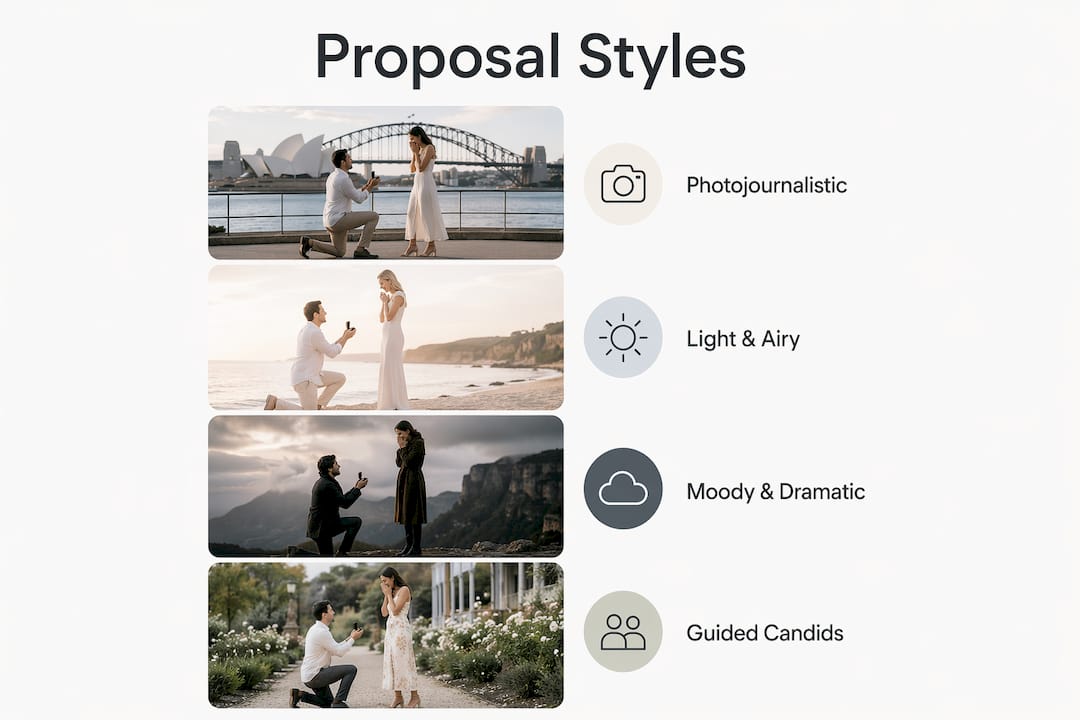
It helps to separate how the moment is photographed from how the final images are edited. Documentary and guided candid photography describe the photographer’s approach, while light and airy or moody and dramatic describe the visual finish. These four approaches can overlap, and understanding them makes it easier to explain what you love.
Photojournalistic (documentary) is particularly well suited to surprise proposals. The photographer works at a distance, capturing candid moments without directing you at all. The result is raw, real, and often the most emotionally powerful. Your tears, laughter, and shock are preserved exactly as they happened.
Light and airy uses natural light, bright tones, and soft colour to create a romantic, dreamy feel. This editing style suits outdoor settings with open sky or golden hour light. It works beautifully in gardens, beaches, or sun-drenched city streets.
Moody and dramatic takes the opposite approach. Rich shadows, deep tones, and cinematic contrast create an intense, emotional atmosphere. This style suits indoor venues, overcast days, or locations with strong architectural character.
Guided candids sit between photojournalism and portraiture. Your photographer subtly positions you or suggests a direction, then steps back and lets the moment unfold naturally. The photos look candid but are gently shaped for better composition.
Style
Best setting
Emotional tone
Photojournalistic
Any location
Raw, authentic, spontaneous
Light and airy
Outdoor, natural light
Romantic, soft, dreamy
Moody and dramatic
Indoor, overcast, architectural
Cinematic, intense, emotional
Guided candids
Any location
Natural with subtle polish
How do you assess your preferences for the right style?
Choosing a photography style is about finding what feels like you and personality, not selecting whatever is trending on social media. Start by asking yourselves a few honest questions.
How do you feel about being photographed? If you freeze up in front of a camera, photojournalistic style removes that pressure entirely. If you enjoy being directed, guided candids may suit you better.
What is your relationship’s natural vibe? Playful, spontaneous couples might love the energy of documentary shots. If you adore soft, romantic images, you may prefer a lighter editing approach. Neither choice rules out the other.
Where is the proposal happening? A clifftop at golden hour calls for a completely different approach than a candlelit restaurant. Venue and lighting compatibility with your chosen style directly affects photo quality and emotional impact.
What do you want to feel when you look at these photos in 20 years? Think about the emotion first, then the editing style. A great gallery can preserve unfiltered reactions and still include beautifully composed portraits.
Scroll through your own Instagram saves and note which wedding or proposal photos stop you mid-scroll. The patterns in what you save reveal your genuine aesthetic preferences far more honestly than any quiz.
Pro Tip:Bring three to five saved photos to your photographer consultation. Showing is faster and more accurate than describing.
Practical steps to choose and prepare for your proposal photography style
Reviewing a photographer’s portfolio is the most reliable way to assess whether their style matches what you want. Look at full galleries, not just highlight images. A single stunning shot tells you little. Seeing a complete gallery gives you a much better sense of editing consistency and how the photographer handles changing light.
Ask these questions when you meet a photographer:
Do they specialise in one style or offer multiple approaches?
Can they share a full gallery from a proposal session similar to yours?
How do they handle surprise proposals without alerting the partner?
What is their backup plan if weather or lighting changes?
Timing matters for both visual quality and maintaining the surprise. Golden hour is popular for its warm, flattering light. A quieter mid-morning proposal can feel less suspicious and offers a more relaxed setting. Discuss timing openly with your photographer so they can position themselves without drawing attention.
Pro Tip:Ask your photographer whether they already know the location or can scout it beforehand. Familiarity with the light, angles and hiding spots makes a real difference on the day.
Location planning also affects which editing styles are achievable. A dark, moody restaurant limits a light and airy approach regardless of how skilled the photographer is. Match your style ambition to what the venue can actually deliver.
Common challenges when choosing and executing your style
The biggest trap is treating every photography style as an all-or-nothing choice. You can have genuine documentary coverage during the surprise and enjoy a few gently guided portraits afterwards. What matters is that your photographer uses a consistent editing approach so the whole gallery feels like one story.
A few other pitfalls worth knowing:
Ignoring the location. A sunlit beach and a candlelit restaurant offer very different lighting. Look for a photographer who can adapt their approach without forcing every scene into the same look.
Over-directing a surprise proposal. If your partner does not know a photographer is present, any attempt to position them too precisely will feel unnatural. Experienced photographers prioritise discretion and adapt to the moment rather than controlling it.
Choosing a style based on trends alone. Trends shift, but your connection is the point of the photographs. Choose what genuinely reflects you.
A skilled photographer can guide couples post-proposal with small, natural adjustments to posing and framing. This preserves authenticity while improving the composition of your portraits.
Key takeaways
The most effective approach to choosing your proposal photography style is to match it to your genuine personality, your venue, and the emotions you want to preserve for life.
Point
Details
Style shapes the whole story
Think about both the shooting approach and editing finish when comparing photographers.
Match style to venue and light
Light and airy suits outdoor natural light; moody and dramatic suits indoor or overcast settings.
Review full galleries, not highlights
A complete gallery reveals editing consistency and how a photographer handles real conditions.
Keep the overall gallery cohesive
Documentary coverage and relaxed portraits can work beautifully together with consistent editing.
Align with your personality
Choose a style that reflects how you naturally are together, not what is currently popular online.
What I have learned about style and authentic storytelling
As an experienced wedding and proposal photographer, I have watched couples agonise over style labels when the real question is simpler: what do you actually feel when you look at a photo?
The couples whose galleries I am most proud of were not the ones who arrived with a detailed mood board. They were the ones who said, “We just want it to feel like us.” That instruction is more useful than any reference image. It tells me to stay back, stay quiet, and trust the moment.
I have also seen what happens when style choice is driven by what looks good on social media rather than what suits the couple. The photos are technically beautiful. But they do not feel true. And five years later, the couple cannot quite explain why the images feel like someone else’s story.
The role of a photographer in a proposal is not to impose a visual style onto your moment. It is to read the room, adapt to what is actually happening, and make choices in real time that honour what is real. Style is the vehicle. Your story is the destination.
— Steven
SvenStudios proposal photography, built around your story
At SvenStudios, I love keeping the actual proposal as natural as possible, whether it happens under the trees at the Adelaide Botanic Gardens, beside the River Torrens or somewhere private in the Adelaide Hills. I can help you think through the timing, where I can discreetly position myself and how to make the most of the location without turning your surprise into a staged production. Once the big question has been asked, we can take a few relaxed portraits while the excitement is still fresh.
What is the difference between proposal and engagement photography?
Proposal photography captures the genuine surprise moment and immediate reactions in a documentary style. Engagement sessions are planned portrait sessions with more time for posed, artistic images.
Which proposal photography style works best for a surprise proposal?
Photojournalistic style is the strongest choice for surprise proposals. It requires no direction from the couple and relies on photographer discretion and positioning to capture the real moment.
How do I choose a proposal photo editing style?
Review full galleries from photographers whose work appeals to you and note the consistent tones, contrast levels, and colour treatment. Matching editing style to your venue and personality produces the most cohesive result.
Does the time of day affect which style I can choose?
Yes, light changes the feel of the images. Golden hour can be soft and warm, while overcast skies and evening lighting bring a different mood. Documentary photography can work at any time of day; discuss your location and timing with your photographer.
How many photos should I expect from a proposal session?
Gallery size varies by photographer and session length, so ask your photographer directly during consultation. A full gallery rather than a highlight set gives you the clearest picture of their editing consistency and storytelling approach.
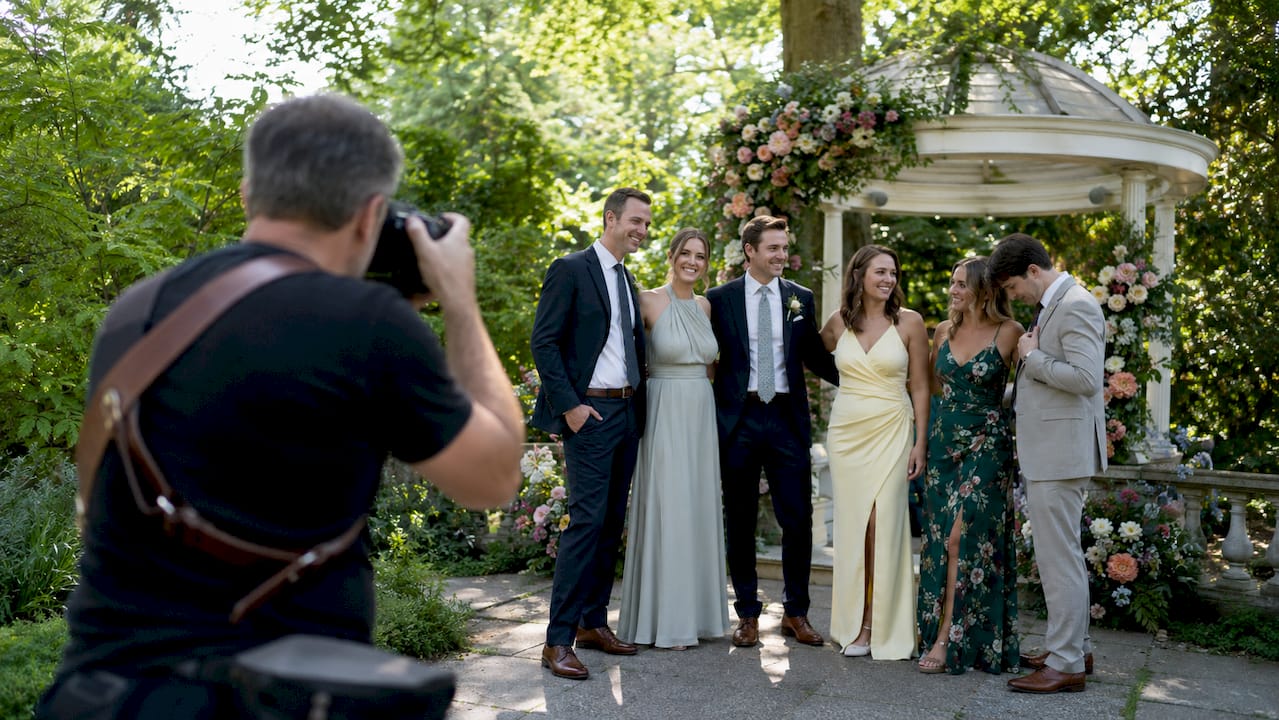
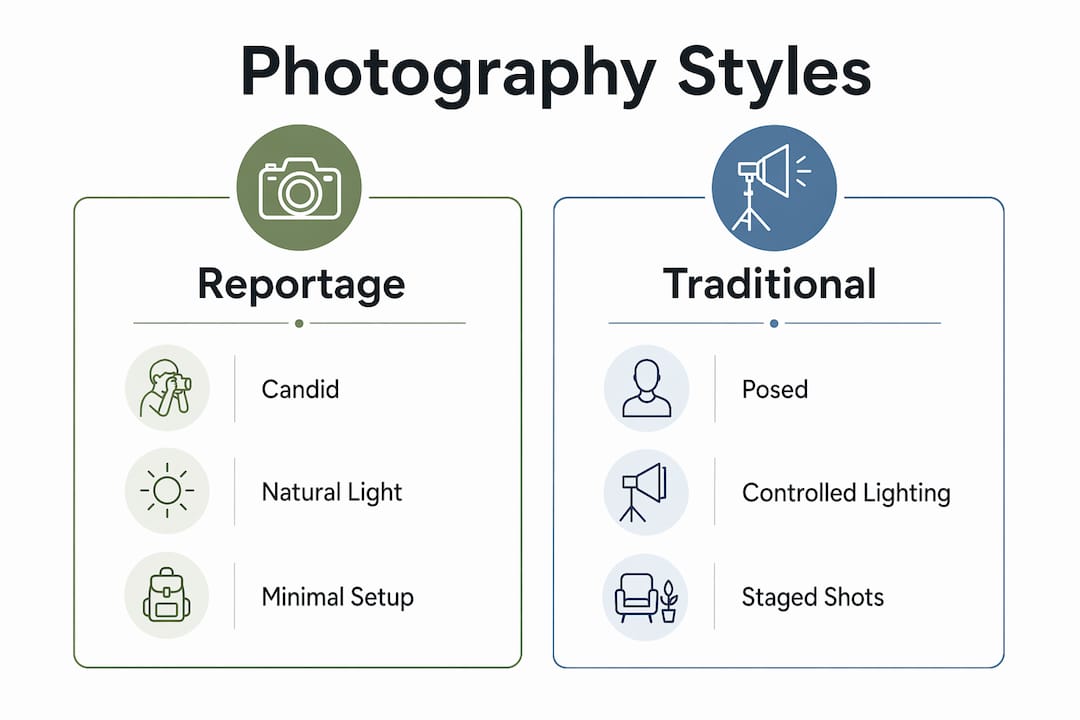
Reportage wedding photography is defined as a candid, unposed style where the photographer documents your day as it naturally unfolds, without directing or staging moments. Traditional wedding photography, also called portraiture or posed photography, relies on planned, directed images including formal portraits and group shots. The core difference between reportage and traditional wedding photography comes down to one thing: how much the photographer intervenes. Understanding this distinction helps you choose a style that fits your personality, your family’s expectations, and the kind of wedding album you actually want to look back on.
What are the key technique and workflow differences?
Reportage photography uses natural light, fast reactive shooting, and minimal intervention. The photographer anticipates moments rather than creating them, working with whatever light and environment the day provides. Traditional portraiture requires controlled lighting and planned environments, which leads to slower post-production and longer editing times. That technical difference shapes the entire feel of your final gallery.
The time commitment on your wedding day also differs significantly. For more information, visit our Adelaide wedding photographers page. Standard traditional wedding photography requires 20–40 minutes for family portraits and 20–30 minutes for couple portraits. That is a meaningful block of your reception or cocktail hour. Reportage coverage, by contrast, needs very little scheduled time because the photographer works around your day rather than pausing it.
Post-processing timelines reflect this same divide. Reportage workflows prioritise agility with typical initial processing turnarounds of 24–72 hours, while traditional portraiture involves longer delivery due to more complex retouching. That does not mean one is better, just different in what you are waiting for.
Feature
Reportage
Traditional
Lighting approach
Natural, adaptive
Controlled, planned
Photographer direction
Minimal to none
Active posing and guidance
Time on the day
Minimal scheduled sessions
40–70 minutes for portraits
Post-processing time
Faster turnaround
Longer due to retouching
Typical image feel
Candid, spontaneous
Polished, structured
Pro Tip:Ask your photographer to show you a full wedding gallery, not just a highlight reel. A full gallery reveals how consistently they deliver in both styles across an entire day.
How do the two styles differ in mood and storytelling?
Reportage creates a flowing visual narrative. Your gallery reads like a film, moving from getting ready through ceremony to reception, with genuine laughter, tears, and quiet moments woven together. The images feel lived-in because they are. Nothing was staged.
Traditional photography focuses on polished, timeless images that document key relationships and formal milestones. Think the classic shot of the bridal party lined up, or the couple posed in golden hour light with a perfectly composed background. These images are crafted rather than caught.
The emotional tone differs noticeably between the two styles:
Reportage delivers images of your grandmother wiping away tears, your best man cracking up during the speeches, and your partner’s face the moment they see you walk in.
Traditional delivers images of the full bridal party together, formal portraits with parents, and carefully lit couple shots that work beautifully as prints.
Reportage tells the story of what your day felt like.
Traditional documents who was there and what it looked like.
Neither is wrong. They answer different questions about your wedding day.
How does your photography style choice affect the wedding day experience?
Your choice of style shapes how your day actually feels, not just how it looks in photos. Traditional photography suits couples who want clear guidance and a structured experience, while reportage suits those who want to forget the camera is there and stay fully present. That is a real difference in how you spend your time.
With a traditional approach, you will set aside dedicated time for portraits. This is not a burden for everyone. Many couples enjoy having a quiet 20 minutes together during cocktail hour, away from guests, while the photographer works with them. The structure can feel reassuring.
With reportage, you move through your day freely. The photographer shadows you without interrupting. For couples who feel self-conscious in front of a camera, this is genuinely liberating. The trade-off is that purely reportage coverage may lack formal family group portraits, which can cause dissatisfaction if those shots matter to your family.
Decide early whether formal family portraits are non-negotiable. If they are, build them into your timeline regardless of style.
Talk to your photographer about a short shot list for key group images, even within a reportage approach.
Consider a hybrid approach.A hybrid style often works best, combining traditional posed shots for key portraits with reportage coverage for ceremony and reception.
Match style to personality. If you hate being directed, lean reportage. If you love polished portraits, lean traditional.
Pro Tip:Build a short shot list of 10–15 must-have group photos and share it with your photographer before the day. This protects you regardless of which style you choose.
What are the common misconceptions about reportage wedding photography?
The biggest misconception is that reportage is easy. Reportage photographers use intense focus on lighting, timing, and composition, working hard to capture spontaneous moments into a cohesive story without posing subjects. The candid appearance is the result of serious skill, not passive shooting.
Another common misunderstanding is that choosing a label guarantees a particular result. A photography label is just a starting point. Couples should review full galleries to confirm the photographer’s actual delivery matches their expectations. Two photographers who both call themselves “reportage” can produce very different work.
A few other misconceptions worth addressing:
“Reportage means no formal shots.” Not true. Most reportage photographers will accommodate a short list of key group images when asked.
“Traditional means stiff and boring.” Not true. A skilled traditional photographer creates portraits that feel warm and genuine, not like a school photo.
Reviewing entire wedding galleries, rather than curated highlight reels, is the most reliable way to understand what you are actually buying. Prioritise full gallery reviews over social media portfolios when shortlisting photographers.
Key takeaways
Reportage and traditional wedding photography serve different purposes, and the best choice depends on your personality, family expectations, and how you want your day to feel.
Point
Details
Core style difference
Reportage is candid and unposed; traditional is directed and structured.
Time on the day
Traditional requires 40–70 minutes for portraits; reportage needs minimal scheduled time.
Emotional tone
Reportage tells the story of how your day felt; traditional documents who was there.
Hybrid approach
Combining both styles satisfies formal portrait needs while preserving candid coverage.
Gallery review matters
Always review full wedding galleries, not highlight reels, before booking a photographer.
My honest take on reportage vs traditional photography
As an experienced wedding photographer, I have shot weddings across both styles and everything in between. The couples who are happiest with their photos are almost never the ones who picked a label. They are the ones who had an honest conversation with their photographer about what they actually wanted.
I lean toward a hybrid approach for most weddings because real life is not purely candid or purely posed. Your mum wants a photo with you. Your partner wants a beautiful portrait together. And you both want to remember the moment your best friend lost it laughing during the speeches. One style alone rarely captures all of that.
The thing I see most often go wrong is couples choosing pure reportage because it sounds relaxed and modern, then feeling disappointed there is no formal shot with the grandparents. Or choosing traditional because it feels safe, then feeling like they spent half their reception being directed. Neither outcome is inevitable with the right planning.
My advice: find your photography style before you book, not after. Look at full galleries. Ask the photographer how they handle family formals. And trust your gut about whether their personality matches yours, because you will spend the whole day with them.
— Steven
How Svenstudios can help you find the right style
Svenstudios offers authentic wedding photography across reportage, traditional, and hybrid styles, tailored to your personalities and the way you want your day to feel. Steven and Luisa work as a husband-and-wife team based in Adelaide, which means you get two perspectives and twice the coverage without the formality of a large photography crew. Every consultation starts with a genuine conversation about what matters most to you, whether that is candid storytelling, polished portraits, or a blend of both. You can also explore the wedding photography checklist to plan your shot list and timing before your big day.
FAQ
What is the main difference between reportage and traditional wedding photography?
Reportage captures your wedding day candidly without posing or directing, while traditional photography involves planned, directed portraits and group shots. The core difference is how much the photographer intervenes in your day.
Is reportage wedding photography harder to do than traditional?
Yes. Reportage requires intense focus on timing, lighting, and composition to capture spontaneous moments into a cohesive story. The candid result is the product of significant skill and experience.
Will a reportage photographer still take family group shots?
Not automatically. Purely reportage coverage may miss formal family portraits, so couples should negotiate a short shot list with their photographer in advance to cover key group images.
What is a hybrid wedding photography style?
A hybrid style combines reportage coverage for ceremony and reception with traditional posed portraits for key images. This approach often works best for couples who want both authentic moments and polished formal shots.
How do I choose between reportage and traditional photography?
Review full wedding galleries from each photographer, not just highlight reels. Then consider your comfort in front of a camera and whether formal portraits matter to your family. The choice often comes down to your desired experience on the day itself.